You signed off on a bathroom estimate that looked solid. Two weeks later, the old tile is gone, and the subfloor under the shower feels soft. Then your contractor hands you a change order you never saw coming. Nobody plans on a bathroom remodel over budget, yet it happens on well-run jobs too. The extra spending usually builds from planning gaps, hidden damage, late material choices, and mid-project changes. Below are seven common causes and practical ways to catch the risks before they turn into unexpected expenses.
Why Can a Bathroom Remodel Exceed Its Approved Budget?
Your estimate, your approved project budget, and your final bill are three different numbers. The estimate prices work the contractor could see and define upfront. The approved budget is what you agreed to spend, ideally with a reserve built in. The final bill shows what the project ultimately cost. Some increases come from concealed problems nobody could price in advance. Others come from changes you request or from planning that stopped short.
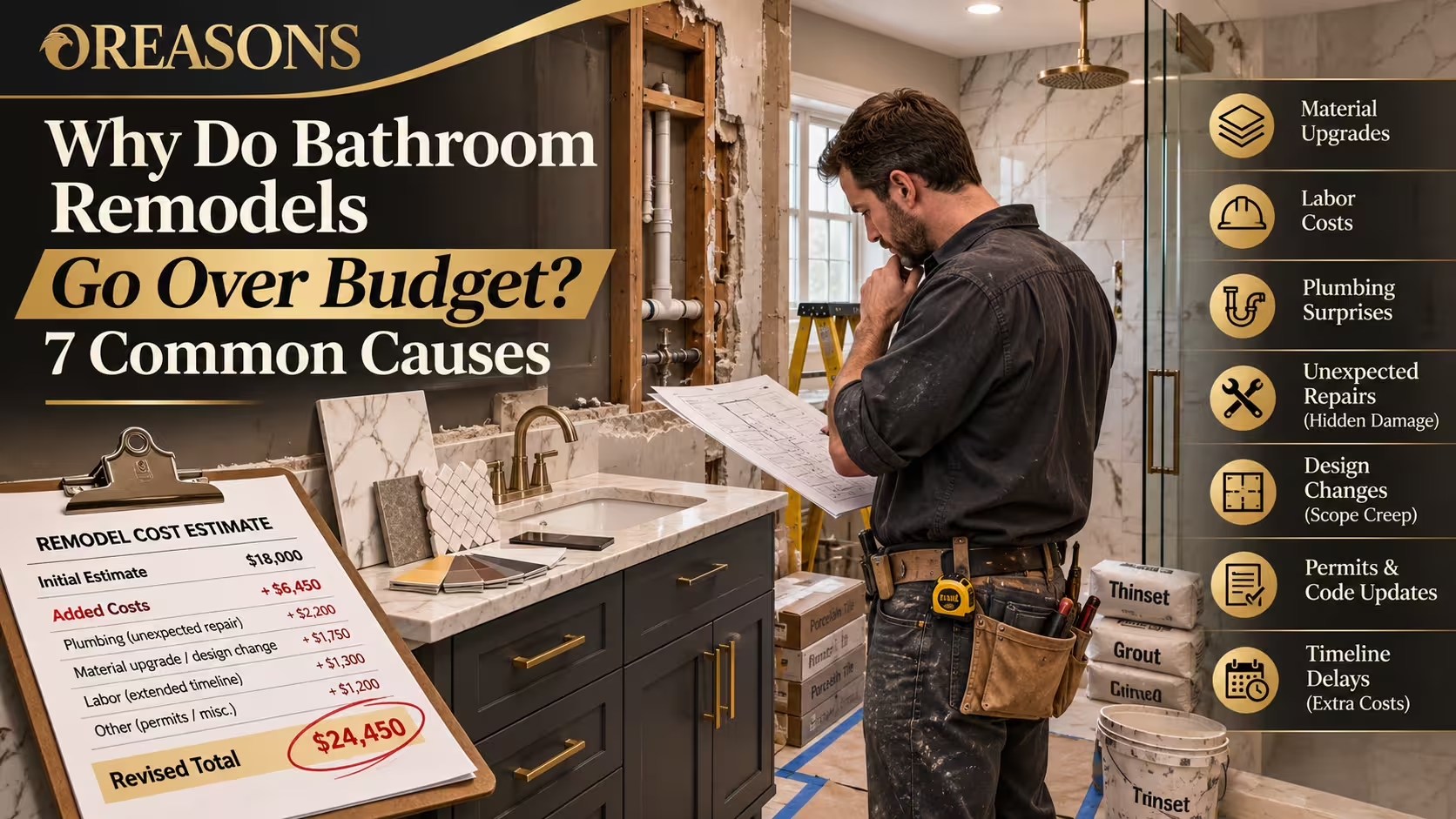
What Are the 7 Common Causes of Bathroom Remodel Budget Overruns?
Most bathroom remodel cost overruns trace back to planning gaps or conditions hidden inside walls and floors, while decisions made after the crew starts add another layer.
1. The Original Estimate Leaves Out Important Work
An inexpensive estimate doesn’t always mean the contractor has overlooked important work. It can also mean parts of the job never made it onto the page. Debris hauling, drywall patching, floor prep, and final trim are easy to leave off, and they come back later as extra charges. Comparing bids by the bottom line alone is one of the most common bathroom renovation budget mistakes. Ask each contractor to walk you through the scope item by item.
2. Demolition Reveals Hidden Water Damage or Subfloor Problems
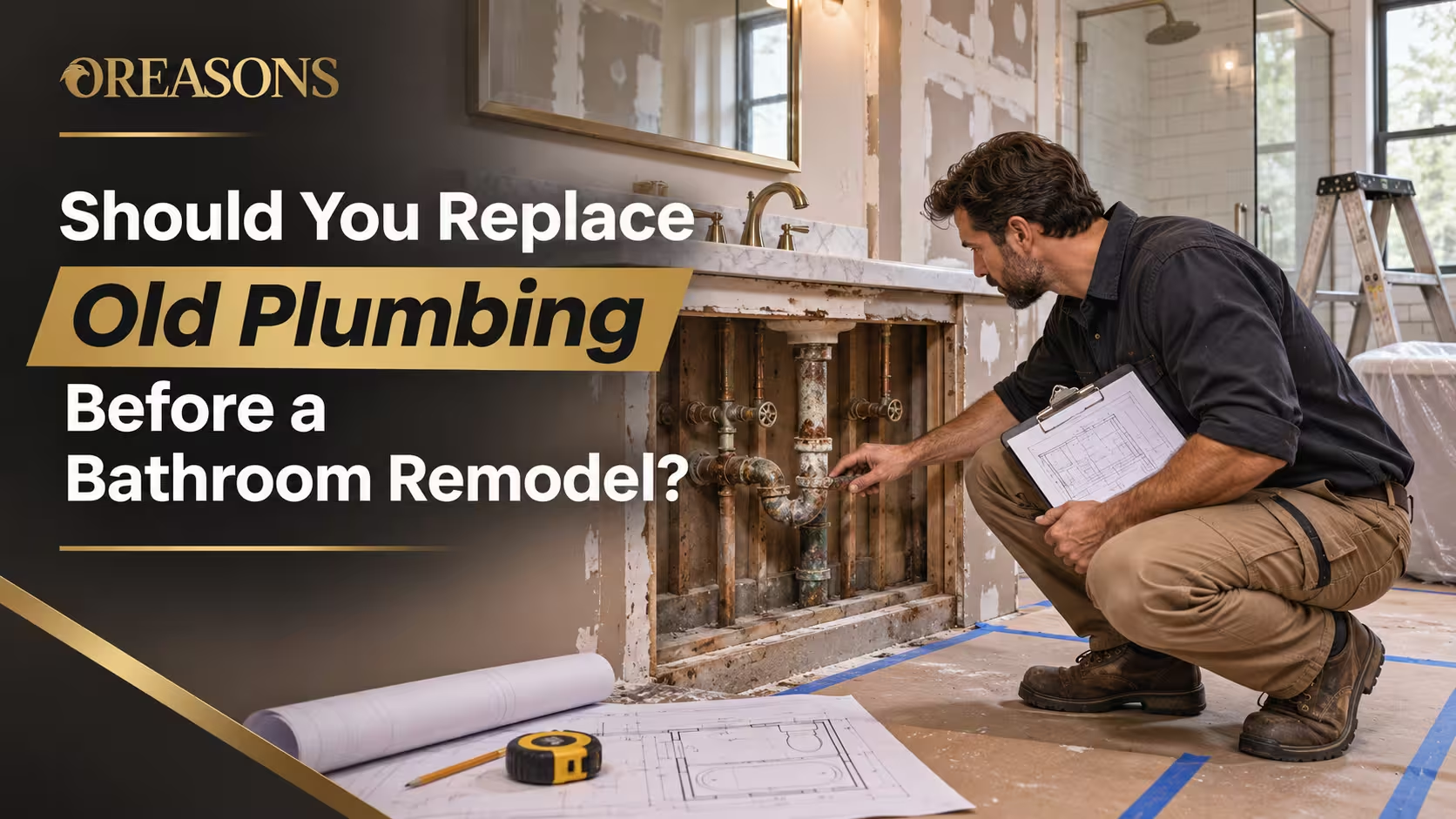
Tear out an old shower, and you see what years of small leaks really did. Water slipping past worn grout or a failing toilet seal can soak the subfloor without any sign on the surface. The crew has to repair hidden subfloor damage and rotted framing before new tile goes down. If the old shower waterproofing failed, the crew may also need to replace the extra backer board first.
Demolition surprises like these are legitimate bathroom remodel hidden expenses because nobody could see them beforehand. That differs from work that should have been included in the original project scope. Removing old tile or replacing an obviously failing shower pan should already appear on the estimate.
3. Plumbing, Electrical, or Ventilation Work Becomes More Extensive
Moving a toilet or shower drain even a short distance changes more than people expect. Drains need proper slope, so plumbing adjustments can mean cutting into floor framing or opening a wall that was meant to stay closed. Older homes may also reveal corroded supply lines, outdated wiring, or a fan venting into the attic. Ask which upgrades the estimate covers and which depend on what the crew finds in the plumbing system.
4. Material Allowances Do Not Match the Homeowner’s Selections
Project allowances are set dollar amounts for items you haven’t picked yet, like tile, the vanity, and faucets. If your selections exceed the allowance, you cover the additional cost. Say the estimate assumes basic ceramic tile and you fall for a handmade or large-format option. That tile costs more and may take more labor to set, so the material upgrade hits twice. Confirming exact products and prices before demolition heads off many unexpected bathroom remodeling costs.
5. Design and Layout Changes Are Made After Construction Begins
Open walls make it tempting to rethink the room. A wider vanity can mean moving drain and supply lines. A relocated shower can require new framing, more waterproofing, extra tile, and redoing finished work. These scope changes arrive as change orders, which amend your construction contract. A necessary correction, such as fixing out-of-level framing, protects the finished bathroom. An optional upgrade added mid-project is your choice to make and to fund.
6. Material Selection Delays and Product Availability Disrupt the Schedule
Crews build bathrooms in a strict order, with plumbing before walls and waterproofing before tile. When a product is late, discontinued, or backordered, that order breaks, and the crew can’t skip ahead. Material selection delays cost money even when product prices hold steady. A tile setter may have to leave and return, or a plumber may need a second trip. Longer schedules and extra coordination can add labor charges nobody planned for.
7. Poor Communication and Unclear Change-Order Approval Lead to Rework
Plenty of overruns start with a simple misunderstanding. The homeowner pictured the niche on the left wall, but the crew framed it on the right. Mix-ups like that lead to rework, which means paying for the same task twice. Extra work done after a quick hallway chat can spark disputes over whether it’s billable. A written change order naming the work, cost, and schedule impact protects both sides.
What Early Warning Signs Suggest a Bathroom Remodel May Go Over Budget?
Budget trouble often leaves clues during bidding and the first weeks of work. Catching them early gives you time to ask questions while changes are still cheap. Watch for these signs:
- One total with no breakdown of the work included
- Vague allowances with no stated selection limits
- Exclusions that aren’t listed anywhere
- No clear plan for handling concealed damage
- Finishes still undecided as the start date nears
- Extra work starting before anyone approves its cost
- A schedule that keeps shifting without explanation
Spot one of these and ask for answers in writing, such as a line-item scope or a firm selection deadline. A good bathroom contractor won’t mind the questions. Raising them early is the simplest way to avoid bathroom renovation overruns.
Which Estimate Exclusions Should Homeowners Check Before Signing?
An estimate can look complete and still leave real costs outside the quoted scope. Before signing, check how it handles these common contractor estimate exclusions:
- Demolition, debris removal, and disposal
- Subfloor repair and concealed water damage
- Plumbing and electrical modifications
- Shower waterproofing and surface preparation
- Permits and inspections, where your project requires them
- Allowances, delivery, and installation
- Extra labor triggered by approved changes
An exclusion doesn’t mean the contractor is being dishonest. Nobody can price some work until the walls are open. What matters is that the contractor discloses each exclusion clearly and you understand it. Your budget should also account for it before you approve the contract.
How Should Homeowners Review and Approve Bathroom Remodel Change Orders?
Some changes are unavoidable once the walls are open. Loose approvals are what turn a reasonable change into a budget problem, so follow these steps every time:
- Ask why it’s needed. Get a plain explanation of the problem and the fix.
- Request documentation. Photos of a concealed condition show exactly what the crew found.
- Review the costs. Check the added labor, materials, and any related charges.
- Ask about the schedule. Find out how many days the change adds.
- Approve in writing first. Sign the revised scope and price before the work proceeds.
Picture a homeowner who decides after demolition to swap a tub-shower combo for a walk-in shower with the drain at the opposite end. That means rerouting the drain line and rebuilding the floor slope, plus possible reframing and extra waterproofing. A proper change order prices each piece before anyone picks up a saw.
How Can a Contingency Fund Help Prevent Bathroom Remodel Budget Overruns?
A contingency fund is money set aside for legitimate surprises. It isn’t a cushion for upgrades you dream up mid-project. The right amount depends on the home, since an older bathroom with signs of past leaks carries more uncertainty than a newer one with sound floors. Heavier demolition also raises the odds of finding something. Discuss a sensible reserve with your contractor before work begins.
Spend it only on documented, necessary repairs like a rotted subfloor or a plumbing problem behind the wall. That discipline makes it a real cost control tool. If a discovery costs more than the reserve covers, ask the contractor to separate urgent repairs from work that can wait. Scaling back a finish or postponing a nonessential item can keep the core repair moving.
Frequently Asked Questions
Why does a bathroom remodel cost more than the original estimate?
Usually, the estimate couldn’t account for everything, with incomplete scopes and hidden damage as frequent drivers. Selections that exceed allowances and mid-project changes add to the total, and they often stack.
Can hidden water damage cause a bathroom remodel to go over budget?
Yes. Slow leaks can damage the subfloor and framing without visible signs on the surface. Once demolition exposes that damage, the crew has to repair it before new flooring or tile goes in.
Should a contractor get written approval before doing extra remodeling work?
Yes. A written change order listing the work, cost, and schedule impact gives both parties a clear record. It also lets you decide before you commit the money.
Final Thoughts
Most bathroom budget overruns trace back to what wasn’t clear before demolition started. A defined scope, realistic allowances, early selections, and written approval for every change are the core of budget overrun prevention. Hidden damage can still appear on a well-planned job, so leave room for it. If you’re planning a bathroom remodel in Houston, Oreasons Remodeling & Construction can talk through your scope and budget. That includes walk-in showers, vanity upgrades, and small bathroom redesigns. Reach out whenever you’re ready to discuss your plans.