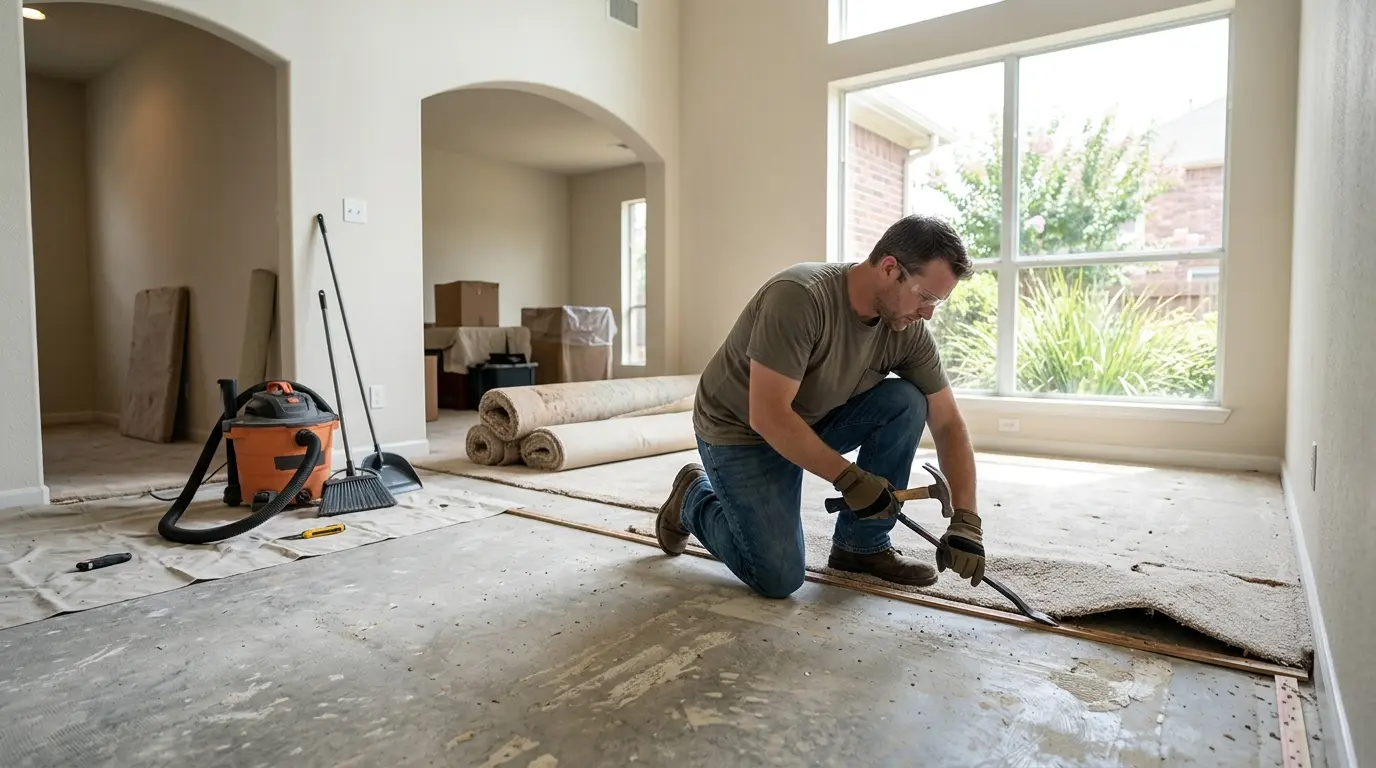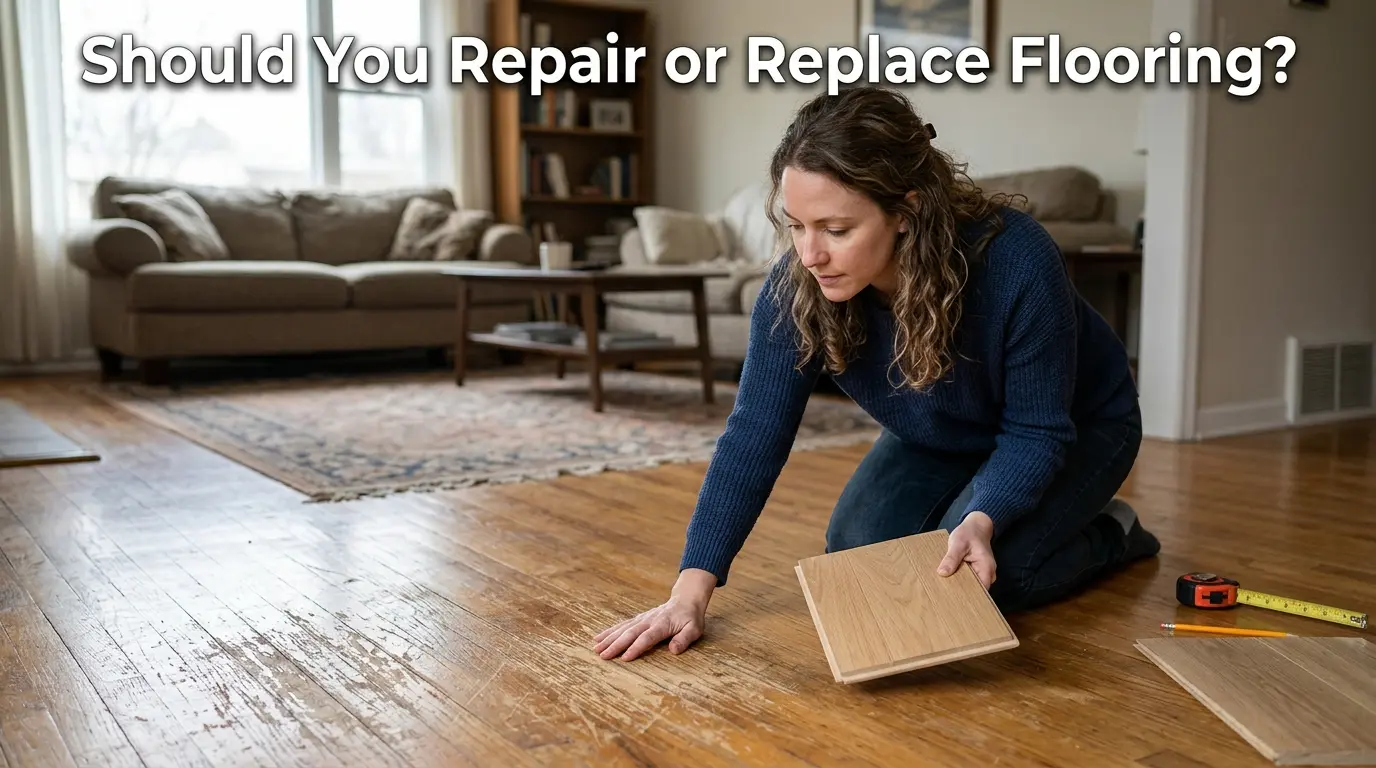
A small scratch does not mean you need a new floor. A loose plank or cracked tile may also be easy to fix. But some damage goes deeper than the part you can see.
You may need full replacement when water has spread under the floor, many planks are lifting, or the subfloor is weak. Repair is often better when the damage is small, dry, and limited to one area.
This guide will help you decide when to repair or replace flooring in your Houston home. It covers water damage, buckling, loose planks, cracked tile, worn carpet, and hidden problems below the surface.
When Is Floor Repair Usually Enough?
Repair often makes sense when the damage is small and the rest of the floor is still in good shape.
One or two damaged planks may be replaced. A chipped area may be filled. A loose tile may be reset after the cause is found. Small carpet damage may also be patched when a close match is available.
A repair is more likely to work when:
- The damage covers a small area.
- The floor below is dry and firm.
- Matching material is available.
- The flooring is not badly worn.
- There is no active leak.
- The same problem has not happened before.
- The repair will not cost close to full replacement.
Some laminate and vinyl makers provide repair products for small scratches, dents, or chips. Individual planks can also be replaced in some floor systems, though the layout may affect how much flooring must be lifted to reach the damaged piece.
When Is Full Flooring Replacement Better?
Replacement is often the better choice when damage is wide, deep, or linked to water below the floor.
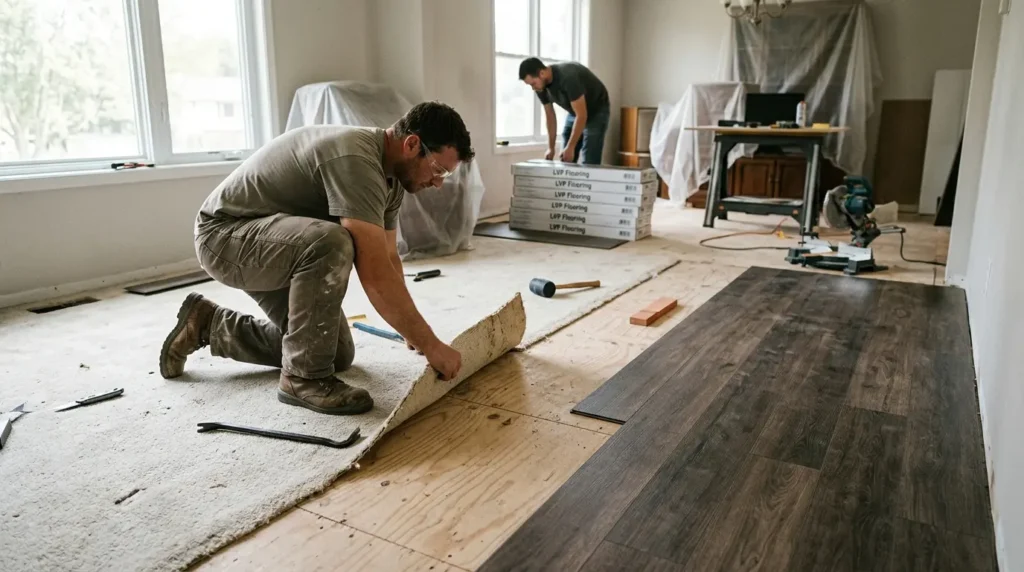
Replacing only the visible area will not solve a wet slab, plumbing leak, damaged subfloor, or poor installation. The floor may look better for a short time, but the same problem can return.
Replacement may make more sense when:
- Damage covers several rooms.
- Large areas feel soft or weak.
- Many planks are lifting or separating.
- Water has moved under the flooring.
- Mold or a musty smell is present.
- The subfloor has lost strength.
- Matching planks are no longer sold.
- The floor is already near the end of its useful condition.
- Several past repairs have failed.
- The damage changes the safety of the room.
Do not base the choice only on how the floor looks. A floor can look clean on top while moisture or decay remains below it.
What Are the Main Signs Flooring Needs Replacement?
The clearest signs flooring needs replacement are damage that keeps spreading, movement across a wide area, and problems below the finished surface.
Watch for these warning signs:
Soft or Sinking Areas
A floor should feel firm when you walk on it. A soft area may point to wet wood, a damaged subfloor, loose material, or a weak section below the floor.
Do not keep covering a soft spot with a rug. The cause should be checked before someone trips or the damage grows.
A Strong Musty Smell
A musty smell may be a sign that moisture has stayed under the floor. The smell may remain even after the visible surface has been cleaned.
Carpet, padding, wood products, and other porous materials can hold moisture. The EPA says moldy porous materials may need to be removed because mold can grow inside spaces that are hard to clean fully.
Damage in More Than One Area
One damaged plank may be a local issue. Similar damage across a room may point to slab moisture, a leak, poor floor preparation, or a lack of movement space.
Fixing one spot will not help when the cause affects the full floor.
Large Gaps or Broken Joints
Small changes between wood planks can happen as indoor conditions change. Large gaps, broken locking joints, or wide movement across a room need closer review.
These signs may come from moisture changes, an uneven base, heavy loads, or installation errors.
The Same Damage Keeps Returning
A floor that needs the same repair again and again has a deeper problem.
Repeated lifting near a dishwasher may come from a slow leak. Cracks that return in the same tile line may point to slab movement. New carpet stains may come from moisture below, not from the carpet itself.
Find the cause before paying for another surface repair.
Can Damaged Floor Repair Fix Scratches and Dents?
Yes. Minor surface damage can often be repaired without replacing the full floor.
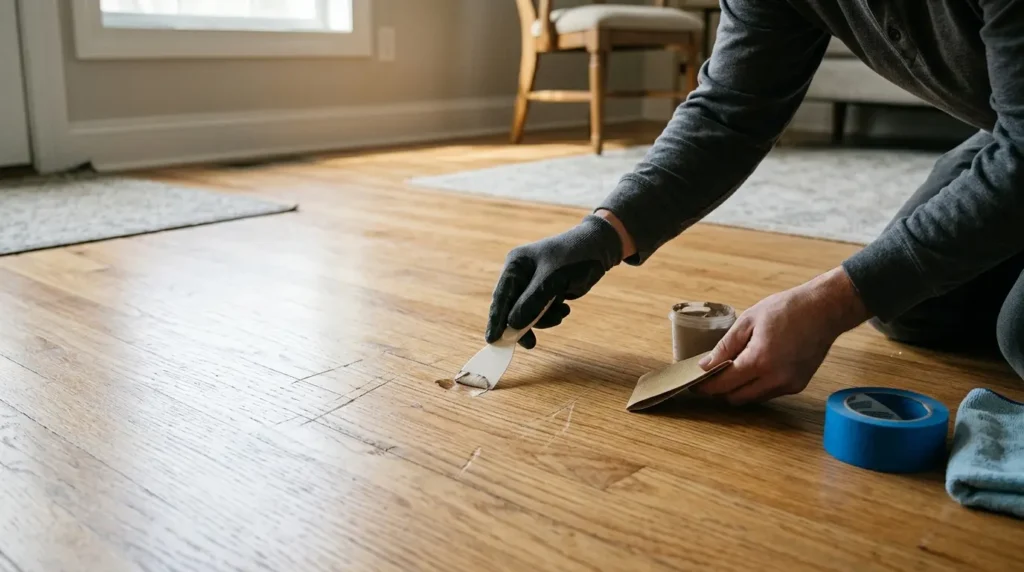
Small scratches in wood may be less visible after cleaning, touch-up work, or refinishing. Light marks on vinyl or laminate may be treated with a product made for that floor. A chipped tile may be repaired or replaced when a match is available.
However, damaged floor repair should not be used to hide a larger issue. A filler may improve the look of a chip, but it cannot fix a loose plank, wet core, or weak subfloor.
Before repairing a mark, ask:
- Is the damage only on the surface?
- Does the area feel firm?
- Is the floor dry?
- Is the damage still growing?
- Did water cause the problem?
- Is the product still under warranty?
- Will a repair kit change the finish or color?
Test cleaning or touch-up products in a hidden area first. Products made for one floor type may damage another.
What Causes Buckling Flooring?
Buckling flooring rises away from the surface below it. The affected area may form a hump, wave, or raised line.
Moisture is one common cause. Wood can change shape when it takes in water. Shaw also notes that moisture can cause wood flooring to warp, curve, or cup.
Other causes may include:
- No space around the walls
- A wet slab or subfloor
- A plumbing leak
- Flood water
- Poor indoor moisture control
- Heavy cabinets placed over a floating floor
- Flooring fixed tightly at several points
- The wrong installation method
A small raised area may be repaired after the cause is fixed. Wide buckling often needs more flooring to be removed so the surface below can be inspected.
Do not push the floor down and cover the edge with trim. The pressure that caused the buckle will still be present.
Why Are My Lifting Floor Planks a Problem?
Lifting floor planks may feel loose, sound hollow, or rise at the edges. They can also create a trip point.
The cause depends on the material. Floating planks may lift when they do not have enough room to move. Glue-down planks may lift when the adhesive fails or the slab is dirty or damp.
Water can also enter through a door, appliance, wall edge, or damaged joint. Even when the plank itself resists water, moisture below it may affect the pad, adhesive, or base.
A repair may work when only a few planks are affected and the base is still dry. Replacement may be needed when:
- Many planks are lifting.
- The joints have broken.
- The plank core has swollen.
- Water remains below the floor.
- The slab needs major preparation.
- Matching products cannot be found.
Do not glue a floating plank to the floor unless the maker allows it. A quick fix can stop the floor from moving as designed and create another raised area.
Can You Save Water-Damaged Flooring?
Some water-damaged flooring can be saved when the water is clean, the area is small, and drying starts fast. The water source must be stopped first.
Hard flooring may sometimes be cleaned and dried. Carpet and other absorbent materials are harder to save after mold begins to grow. The EPA advises fixing leaks quickly and drying wet areas within 24 to 48 hours to lower the chance of mold growth. It also says moldy porous materials may need to be removed.
The type of water matters too. Water from a clean supply line is different from sewage or flood water. The EPA recommends professional help when damage involves sewage, contaminated water, or a large affected area.
Replacement is more likely when:
- The plank core has swollen.
- Wood stays cupped after drying.
- Carpet padding remains wet.
- Mold is visible.
- The room has a strong odor.
- Water reached the subfloor.
- Dirty or contaminated water entered the home.
- The damage was not found quickly.
Do not install new flooring until the base is dry and the water source has been fixed.
How Does Subfloor Damage Affect the Decision?
The subfloor or slab supports the finished floor. If that base is weak, a surface repair will not last.
Common signs of subfloor damage include:
- Soft areas
- Squeaks that are getting worse
- Floor movement
- Loose tile
- Repeated cracks
- Dark water marks
- A musty smell
- Raised or sinking sections
- Weak wood around a toilet or appliance
The National Wood Flooring Association says damaged plywood should be replaced when clear damage is present. Its guidance also stresses that the base must be suitable before flooring is installed.
For carpet water damage, EPA guidance says the subfloor below the carpet must also be cleaned and dried. Replacing the carpet alone may trap the problem below the new material.
A contractor may need to remove part of the finished floor to see the full condition below it. This can add work, but guessing is worse.
Should Cracked Tile Be Repaired or Replaced?
One cracked tile may be replaced when the nearby tiles are firm and the slab below is stable.
Several cracks in a straight line may point to movement below the tile. Loose tiles, hollow sounds, or broken grout around the same area can also show that the base needs attention.
Repair may work when:
- Only one or two tiles are damaged.
- Matching tile is available.
- The slab crack is stable.
- Nearby tiles are firmly bonded.
- There is no active water problem.
A larger replacement may be better when cracks cover a wide area or keep returning. New tile should not be placed over an untreated cause.
Should Damaged Carpet Be Patched or Replaced?
A small burn, tear, or stain may be patched when matching carpet is available. A repair works best in a low-visibility area where the seam will not stand out.
Replacement is often better when:
- The carpet has wide wear paths.
- Padding has broken down.
- Water reached a large area.
- Mold or a musty smell is present.
- Pet odors remain after cleaning.
- The carpet is loose across the room.
- Many areas are stained or damaged.
Carpet and padding absorb water. The EPA notes that moldy carpet may need to be discarded because porous materials can be hard to clean fully.
Do not place new carpet and padding over a damp slab or wood base.
Does Houston Weather Increase Flooring Damage Risk?
Houston homes deal with warm weather, regular rain, indoor air conditioning, plumbing leaks, and storm-related water risk. Local National Weather Service records show large changes in yearly rainfall, including years with totals well above normal.
Weather alone does not damage a properly installed indoor floor. Problems begin when water enters the home, indoor moisture is not controlled, or a concrete slab affects a moisture-sensitive product.
Homeowners in Houston, TX should pay close attention to flooring near:
- Exterior doors
- Kitchens
- Bathrooms
- Laundry rooms
- Dishwashers
- Refrigerators
- Toilets
- Ground-level walls
- Past flood or leak areas
After heavy rain, check for new smells, lifting edges, dark marks, or soft flooring. Early action may keep a small repair from becoming a full replacement.
How Can You Compare Repair and Replacement?
Use the full condition of the floor, not only the cost of one damaged plank.
| Repair may be better when | Replacement may be better when |
| Damage is small | Damage covers a wide area |
| The floor below is dry | The base is wet or weak |
| Matching material is available | The product is no longer sold |
| The rest of the floor looks good | The full floor is worn |
| The cause has been fixed | The cause is still active |
| Only surface damage is present | Damage reaches the core or subfloor |
| The repair will blend well | The repair will stand out badly |
| It is the first repair | Past repairs keep failing |
Ask for both options when possible. A good inspection should explain the cause, repair area, replacement area, and risk of the problem returning.
Questions to Ask Before Approving the Work
Before choosing a damaged floor repair or full replacement, ask:
- What caused the damage?
- Is the area fully dry?
- Does the subfloor need repair?
- How far has the damage spread?
- Can matching flooring be found?
- Will the repaired area look different?
- Does the warranty cover the problem?
- Could the damage return?
- What must be removed to inspect below?
- Is repair still good value?
Do not accept “we can cover it” as a full answer. The cause matters more than the cosmetic fix.
For more help comparing floor types and installation needs, read the Houston flooring guide.
Get the Cause Checked Before Choosing
The choice to repair or replace flooring should begin with the cause of the damage.
A small scratch, chip, or single broken plank may only need a simple repair. Wide buckling flooring, repeated lifting floor planks, hidden moisture, or serious subfloor damage may call for full replacement.
Do not spend money on a surface fix before checking what is below it. Repair the leak, dry the area, and make sure the base is firm.
Oreasons Remodeling & Construction provides flooring removal, surface checks, repairs, and installation services in Houston and nearby communities. Review its flooring services or use the contact to request an inspection for damaged flooring.
Frequently Asked Questions
Is it cheaper to repair or replace flooring?
A small repair is usually cheaper at first. Replacement may offer better value when damage is wide, the floor is badly worn, or several repairs would be needed.
Can one damaged plank be replaced?
Often, yes. The answer depends on the floor type, installation method, plank location, and access to a matching product.
Will buckled flooring go flat after it dries?
Sometimes minor wood movement improves after drying. Severe buckling, broken joints, or damaged cores may not return to their old shape.
Can water-damaged laminate be repaired?
A light surface spill may cause no lasting harm when cleaned fast. A swollen laminate core cannot usually be returned to its original shape, so affected planks may need replacement.
Can LVP be reused after water gets under it?
Some click-lock planks may be removed and reinstalled if they are undamaged and the product allows it. The base must be cleaned and dried first.
Does a soft floor always mean subfloor damage?
Not always. It may also come from poor floor preparation, loose material, or a low spot. The area needs inspection to find the cause.
Should I replace all flooring after a leak?
Not always. The answer depends on how far the water spread, how long it stayed, the water source, and the condition of the flooring and subfloor.
Can flooring be installed over a damaged subfloor?
No. A weak, wet, or uneven base should be repaired before the new floor goes down.