New flooring can change the whole feel of a home. It can make a room look cleaner, brighter, and more modern. But choosing a floor is not only about color or style. The room, moisture level, foot traffic, cleaning needs, and surface below the floor all matter.
This Houston flooring guide will help you compare common materials and understand the installation process. It also explains what may affect your budget. By the end, you should have a clearer idea of what may work for your home in Houston, TX.
How Should You Choose Flooring for Your Home?
Start with the room, not the sample.
A floor that works well in a bedroom may not work in a bathroom. Kitchens deal with spills and dropped items. Entryways collect dirt and rainwater. Living rooms need a balance of comfort, style, and strength.
Think about how the room is used each day. Do you have pets? Do children play on the floor? Is the room near an outside door? Does it get wet often? These simple questions can help you avoid the wrong material.
You should also look at the surface below the current floor. Many Houston homes have concrete slab foundations. A slab may have cracks, low areas, or moisture concerns. These problems should be checked before the new material is installed.
What Are the Main Flooring Options for Houston Homes?
The most common flooring options for Houston homes include luxury vinyl plank, engineered hardwood, tile, laminate, carpet, and natural stone.
Each material has good and bad points. Some are easier to clean. Some feel warmer. Others handle water better. The right answer depends on the room and the way your family lives.
Luxury Vinyl Plank
Luxury vinyl plank is often called LVP. It is a popular choice because it is easy to clean and comes in many wood-style designs.
LVP can work well in kitchens, living rooms, halls, and busy family spaces. Many products are made to resist scratches and stains. Some are also sold as waterproof flooring.
Still, the word “waterproof” should be checked carefully. The plank may resist water, but moisture can still move below it or around the walls. Water may also affect the underlayment, adhesive, or slab.
A flat and clean base is important. If the floor below has dips or raised areas, the planks may move or separate over time.
Engineered Hardwood
Engineered hardwood has a real wood surface over a layered base. It gives a home the warm look of wood without using one thick piece of timber.
It can be a good fit for bedrooms, dining rooms, living rooms, and open family areas. It often feels more natural than vinyl or laminate.
Wood still reacts to moisture. Indoor air control, correct installation, and product choice all matter. Spills should be cleaned fast. The installer should also confirm that the product can be used over the home’s slab or subfloor.
Engineered hardwood is not the best fit for every wet room. It may require more care than tile or LVP.
Tile Flooring
Tile is a strong choice for bathrooms, kitchens, laundry rooms, and entry areas. Ceramic and porcelain tile are easy to clean and come in many shapes and styles.
Tile handles normal water exposure better than many wood-based materials. However, it still needs a solid base. Cracks or movement below the tile can cause damage above it.
The layout also matters. Poor tile lines, uneven spacing, or bad cuts can make even an expensive product look cheap. Good planning is needed before the first tile is placed.
Grout also needs care. Some grout may stain or crack if it is not installed or maintained in the right way.
Laminate Flooring
Laminate gives the look of wood at a lower starting cost than many real wood products. It can work well in bedrooms, offices, living rooms, and other dry areas.
Some laminate products resist water better than older versions. Still, water-resistant flooring and waterproof flooring are not always the same thing.
Water can enter through edges or damaged joints. When this happens, the inner core may swell. Laminate is usually not the safest choice for rooms with frequent spills or standing water.
A flat base is also important. Uneven areas can place stress on the locking joints.
Carpet
Carpet feels soft and warm. It can also reduce sound, which makes it useful in bedrooms, upstairs rooms, and family spaces.
It is not ideal for every room. Carpet can hold dust, stains, pet hair, and moisture. It usually does not belong in bathrooms, laundry rooms, or wet entry areas.
The carpet pad is also important. A poor pad can affect comfort and wear. Seams and stretching should be handled with care so the carpet stays smooth.
Natural Stone
Natural stone can give a home a rich and custom look. Common choices include marble, travertine, slate, and limestone.
Stone may need more care than standard tile. Some types can stain, scratch, or react to strong cleaners. Sealing may be needed, depending on the product.
The floor below must also be strong enough for the material. Stone can be heavy, and weak or uneven areas may cause cracks.
What Is the Best Flooring for Houston Climate Conditions?
The best flooring for Houston climate conditions is one that suits the room and is installed with moisture in mind.
Houston often has warm, humid weather. The area can also receive heavy rain. This does not mean homeowners must avoid wood or laminate. It does mean the floor, slab, and indoor air should be checked with care.
A concrete slab may look dry but still hold moisture. That moisture can affect glue, wood-based floors, or material placed above it. In some homes, moisture testing may be needed before installation.
Tile and many LVP products can work well in rooms that may get wet. Engineered hardwood may work in dry, climate-controlled areas. Laminate is often better for spaces with a lower risk of spills.
No indoor floor should be treated as flood protection. A waterproof surface may still allow water to reach the walls, baseboards, adhesive, or slab.
What Affects Flooring Installation Cost in Houston?
The flooring installation cost Houston homeowners receive can change from one project to another. Room size is only one part of the total.
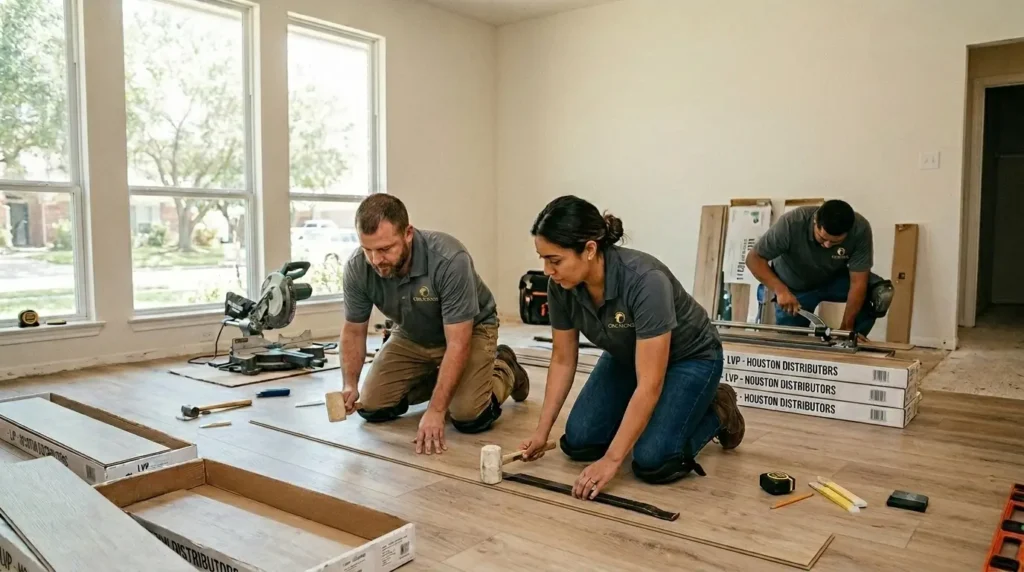
The type of material affects the cost. Tile, carpet, vinyl, laminate, wood, and stone all need different tools and installation methods. Some materials also need special glue, padding, grout, or underlayment.
The condition of the old floor matters too. A clean and level surface may need little work. A damaged floor may need removal, patching, grinding, or leveling.
Other cost factors may include:
- Old flooring removal
- Waste disposal
- Furniture moving
- Subfloor or slab repair
- Moisture testing
- Floor leveling
- Stairs and small spaces
- Baseboard work
- Door and trim changes
- Transitions between rooms
- Material waste from cuts
Do not compare quotes by the final number alone. One quote may include removal and cleanup, while another may not.
A clear estimate should show what work is included. It should also explain what could cause the price to change after the old floor is removed.
Should You Repair or Replace Your Floor?
A repair may be enough when the damage is small and the rest of the floor is in good shape.
For example, a few damaged planks may be replaced if matching material is available. A small loose tile area may also be repaired after the cause is found.
A full floor replacement Houston project may make more sense when the damage covers a large area. It may also be needed when the floor has wide wear, strong odors, soft spots, deep cracks, or signs of water below it.
The cause should always be fixed first. New planks will not solve an active leak. New tile will not fix a moving base. Covering the problem may only hide it for a short time.
A professional inspection can help you decide if repair is still worth doing.
What Happens During the Houston Flooring Installation Process?
The Houston flooring installation process should begin with an inspection. Installing the visible material is only one part of the job.
Measuring and Planning
The contractor should measure each room and look at doors, stairs, closets, baseboards, and room changes.
The team should also ask how the room is used. A busy kitchen may need a different material than a quiet guest room.
The layout should be planned before work starts. This includes plank direction, tile lines, seams, cuts, and transitions.
Removing the Old Flooring
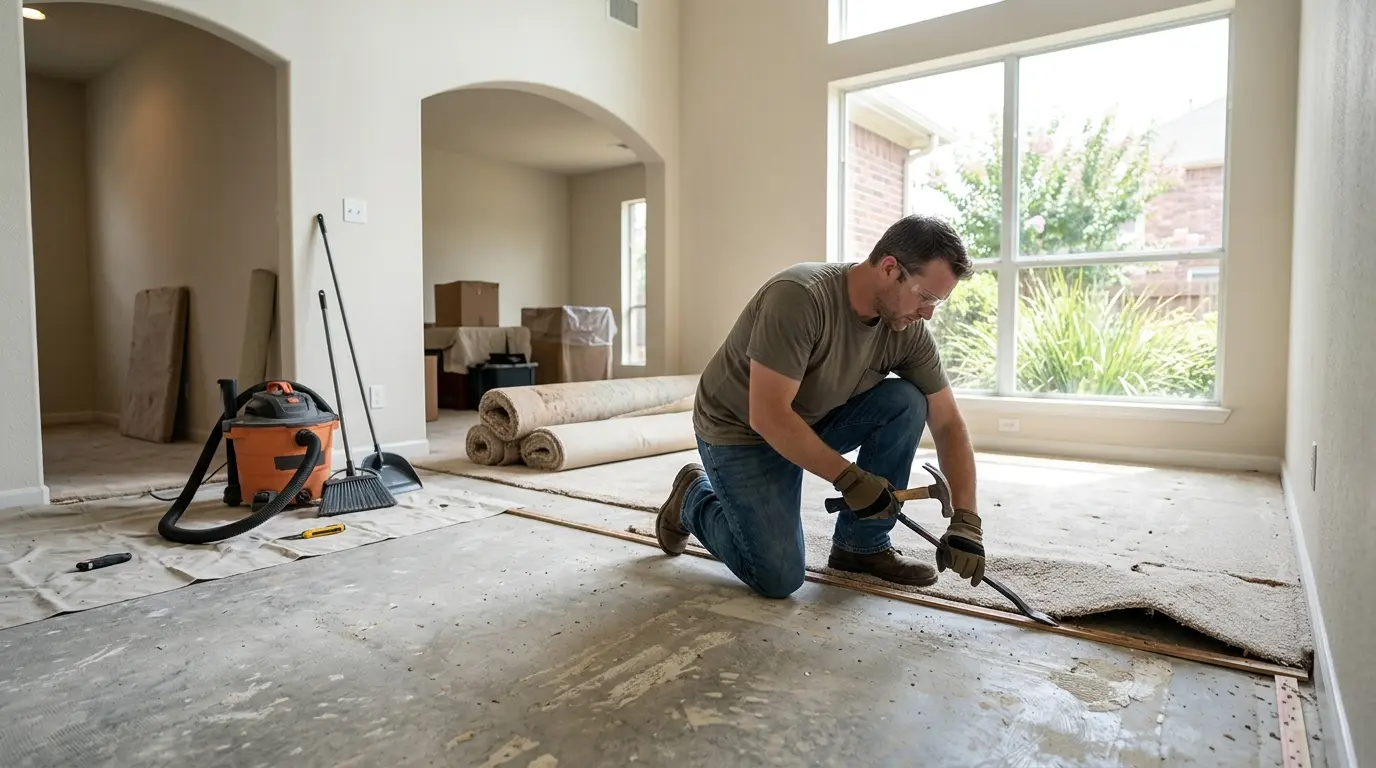
Some projects allow a new floor to be placed over an existing surface. Others need full removal.
The choice depends on the old material, floor height, product rules, and surface condition. Loose, wet, soft, or damaged flooring should not simply be covered.
Flooring removal and installation can create dust and noise. The work area should be protected, and removed material should be cleared from the home.
Preparing the Surface
This is one of the most important steps.
The slab or subfloor should be clean, dry, firm, and level. Cracks, loose areas, old glue, and uneven spots may need work.
Skipping preparation may save time at first, but it can lead to movement, gaps, broken joints, loose tile, or visible dips later.
Installing the New Floor
The installation method depends on the material. Some floors float above the base. Others are glued, nailed, or placed in mortar.
Some products may need time inside the home before installation. This helps them adjust to indoor conditions. The installer should follow the maker’s rules instead of using one method for every product.
Finishing and Cleanup
After installation, the crew should check cuts, seams, transitions, edges, and trim.
The room should be cleaned, and waste should be removed. The homeowner should also receive basic care instructions.
Oreasons Remodeling & Construction explains its flooring work on the company’s professional flooring services page.
How Do You Choose a Flooring Contractor in Houston?
A good flooring contractor Houston homeowners can trust should inspect the home before giving a final plan.
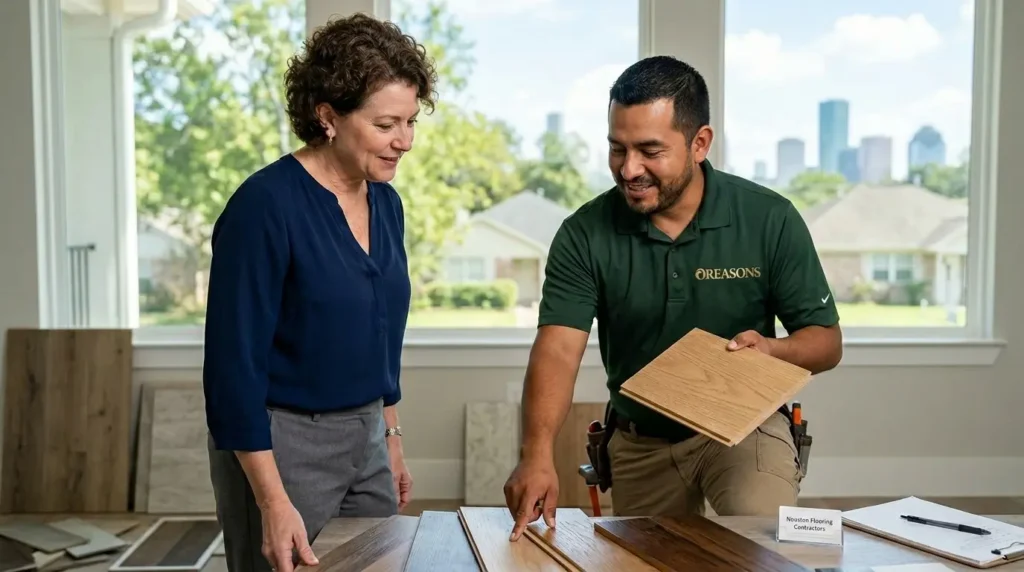
Be careful with anyone who gives a firm answer without seeing the floor. Photos and room sizes are helpful, but they may not show slab damage, old glue, moisture, or low areas.
Ask the contractor these questions:
- Is old floor removal included?
- Will you inspect the slab or subfloor?
- How will you handle cracks or uneven areas?
- Who moves the furniture?
- What type of installation will you use?
- Is cleanup included?
- How are extra repairs approved?
- What product and labor details will I receive?
A professional Houston flooring company should give clear answers. The written estimate should match the work discussed during the visit.
You can also look at past work in the Oreasons Remodeling & Construction project gallery.
How Can You Protect Your New Floor?
Good daily care can prevent many common problems.
Use mats near outside doors to catch dirt and small stones. Place soft pads under chairs, tables, and other furniture. Do not drag heavy items across the room.
Clean spills as soon as you see them. Avoid soaking the floor with water. Use cleaning products made for the exact material.
Watch for changes such as raised edges, loose tile, new gaps, cracked grout, or soft spots. A musty smell may also point to hidden moisture.
Small problems are often easier to manage when they are found early.
Plan Your Houston Flooring Project
The best floor is not always the most costly one. It is the floor that fits the room, your daily needs, and the condition of your home.
Use this Houston flooring guide to compare materials and prepare better questions. Check the surface below the old floor, ask what the quote includes, and choose a product that makes sense for the space.
For flooring installation in Houston, Oreasons Remodeling & Construction can inspect your current floor, explain suitable options, and prepare a project estimate. You can start by using the company’s contact page.
Frequently Asked Questions
What flooring works best in a Houston home?
It depends on the room. Tile and many LVP products work well in wet or busy spaces. Engineered hardwood can suit living areas. Laminate and carpet often work better in dry rooms.
Is LVP a good choice for Houston homes?
LVP can be a practical choice because it is easy to clean and can handle daily wear. The slab must still be checked, and the product should match the room.
Can hardwood be installed in Houston?
Yes, but the type of wood, indoor moisture, slab condition, and installation method matter. Engineered hardwood is often considered for homes built on concrete slabs.
Do I need moisture testing before floor installation?
It depends on the floor and the surface below it. Moisture testing may be needed for some products installed over concrete.
How long does flooring installation take?
The time depends on room size, material, old floor removal, surface repairs, layout, and trim work. An in-home inspection is needed for a useful schedule.
Can new flooring be installed over an old floor?
Sometimes. The old floor must be clean, stable, dry, level, and approved for the new product. Damaged or loose flooring often needs to be removed.
Should I choose the cheapest flooring quote?
Not always. A low quote may leave out floor removal, repairs, leveling, transitions, or cleanup. Compare the full work plan, not only the total.
Is waterproof flooring safe from flood damage?
No. The surface may resist water, but water can still reach walls, trim, adhesive, and the base below the floor.