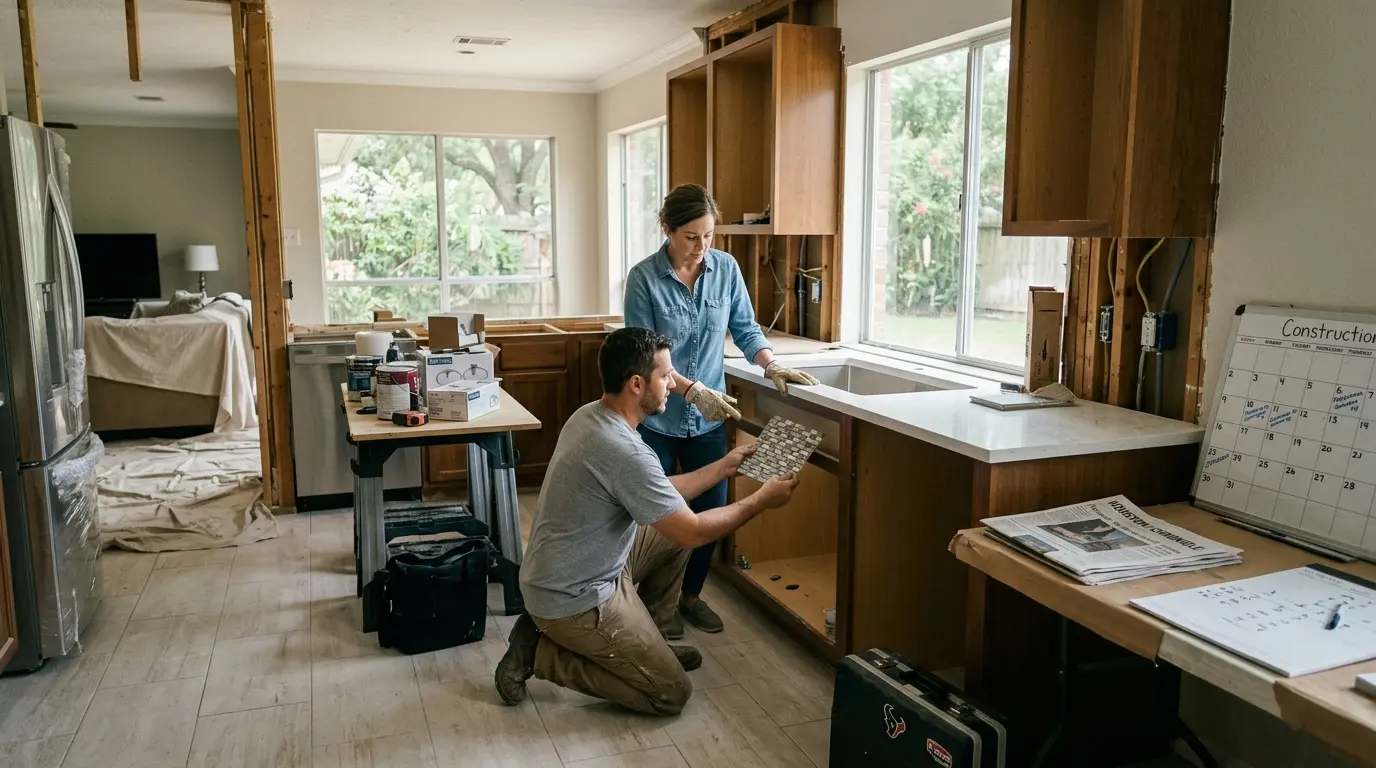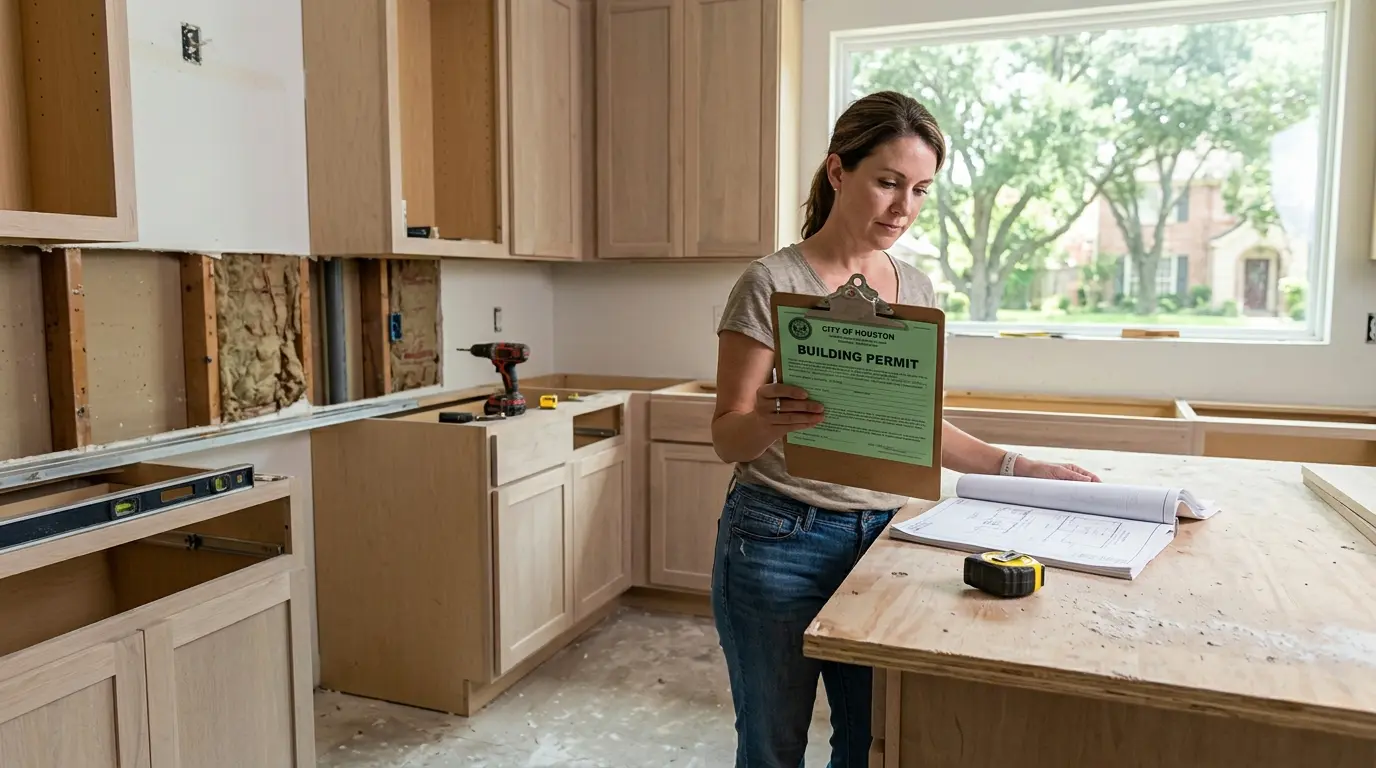
A lot of Houston homeowners ask this question before starting a kitchen project. The answer is not a simple yes or no. It depends on what you are changing. Swapping out cabinet hardware or painting walls? No permit needed. Moving a sink or adding new electrical lines? That is a different story. These changes are common parts of professional kitchen remodeling projects and should be planned with the required permits in mind.
The Houston kitchen remodel permit rules can feel confusing at first. The City of Houston has its own way of doing things. But once you understand the basics, it makes sense. This guide breaks down which projects need permits, which ones do not, and how the inspection process works. You will also learn who should handle the paperwork and what happens if you skip it.
When Do You Need a Permit for a Kitchen Remodel in Houston?
The short answer is this. Any work that changes plumbing, electrical, gas, or structure needs a permit. That covers a lot of kitchen remodels. Moving a sink means plumbing work. Adding under-cabinet lighting means electrical work. Taking out a wall means structural work. All of these trigger permit requirements.
The longer answer is that cosmetic changes do not need permits. Painting cabinets, replacing hardware, installing a new faucet in the same spot, or swapping out light fixtures without changing wiring. These are considered finish updates. They do not require city approval. But the moment you touch something behind the wall or under the floor, you need to check the rules. When in doubt, ask a licensed contractor who knows Houston codes.
What Is the Houston Kitchen Remodel Permit Process?
The process starts with a permit application. Your contractor submits plans to the Houston Permitting Center. For simple jobs, this might just be a basic description of the work. For bigger projects, you need detailed drawings. The city reviews everything and either approves it or asks for changes.
Once approved, the work can start. Inspectors come at different stages to check the work. A typical kitchen remodel might need a rough-in inspection before walls are closed. Then a final inspection after everything is done. Each inspection has to pass before the next step can happen. If something fails, the contractor fixes it and schedules a reinspection. That adds time but keeps the project safe and legal.
What Projects Trigger a Kitchen Renovation Permit in Houston?
Here is a simple breakdown. Electrical work needs an electrical permit. This includes adding outlets, moving switches, installing new circuits, or upgrading the panel. Plumbing work needs a plumbing permit. Moving a sink, adding a pot filler, relocating a dishwasher, or changing drain lines all fall under this. Gas line changes need a mechanical permit. That covers moving a gas range or adding a gas line for a new cooktop.
Structural changes need a building permit. Removing a load-bearing wall, widening a doorway, or changing the roofline all require one. Even non-load-bearing wall removal can trigger a permit if it changes the floor plan. The key word is change. If you are keeping everything where it is and just replacing finishes, you probably do not need a permit. If you are moving things around, you probably do.
What Does the City of Houston Require for a Kitchen Remodel Permit?
The City of Houston uses the iPermits system for online applications. For simple trade permits, the process is straightforward. The contractor logs in, describes the work, and pays the fee. For structural work, the process is more involved. You need a floor plan and sometimes structural drawings from a Professional Engineer.
If your home is in a floodplain, there is an extra step. The city does a floodplain review to make sure the remodel does not create drainage problems. This applies to many older Houston neighborhoods. Your contractor will know if this affects your property. The important thing is to have everything documented before work starts. Skipping paperwork does not save time. It creates problems later.
Who Pulls the Permit for a Kitchen Remodel in Houston?
The homeowner can pull their own permit. But that is usually a bad idea. When you pull the permit, you become responsible for the work. That means you are liable if something goes wrong. You also have to schedule inspections and deal with any issues that come up.
A licensed general contractor should handle this for you. They carry insurance. They know the inspectors. They understand Houston codes. For electrical work, the contractor must have a Master Electrician on staff. For plumbing, the Texas State Board of Plumbing Examiners requires a Responsible Master Plumber to oversee the work. The TDLR licenses these professionals. Make sure your contractor has the right credentials before you sign anything.
What Is a Houston Kitchen Electrical Permit?
An electrical permit covers any work that touches wiring, outlets, switches, panels, or lighting circuits. Adding a dedicated circuit for a new refrigerator needs one. Moving a light switch to a new wall needs one. Installing a range hood with a new electrical connection needs one.
The inspection process checks that the work meets current code. Houston follows the National Electrical Code with local amendments. A Master Electrician handles the permit and the inspection. If you are just replacing a light fixture in the same spot with existing wiring, you do not need a permit. But if new wiring is being run, you do.
What Is a Houston Kitchen Plumbing Permit?
A plumbing permit covers changes to water supply lines, drain lines, and gas lines. Moving a sink to a new location needs one. Adding a pot filler above the stove needs one. Relocating a dishwasher needs one. Changing the layout of your kitchen almost always means plumbing changes.
The Responsible Master Plumber on your contractor’s team handles this permit. Inspectors check for proper venting, correct pipe sizing, and leak-free connections. If the work fails inspection, the plumber fixes it and schedules a reinspection. This is normal. It happens all the time. The important thing is that the final work passes and is documented.
What Is a Houston Structural Remodel Permit?
A structural remodel permit is needed when you change the bones of the house. Removing a wall, adding a beam, widening a doorway, or changing the roofline all require one. Even if the wall is not load-bearing, the city may want to see a floor plan showing the change.
For load-bearing wall removal, you need structural drawings from a Professional Engineer. These drawings show how the weight will be supported after the wall is gone. The engineer calculates beam sizes and connection details. The city reviews these before approving the permit. This is not optional. Cutting corners on structural work can damage your home and put your family at risk.
What Happens During a Houston Kitchen Remodel Inspection?
Inspections happen at different stages. The first is usually a rough-in inspection. This happens after the plumbing, electrical, and HVAC work is done but before the walls are closed. The inspector checks that everything is installed correctly. If it passes, the contractor can hang drywall.
The final inspection happens after all the work is complete. The inspector checks that everything matches the approved plans. They look at outlets, fixtures, ventilation, and safety features. If everything is correct, the permit is closed. That closing is important. An open permit can cause problems when you sell the house. It shows the work was never officially finished.
What Happens If You Skip the Permit?
Some homeowners think skipping the permit saves money. It does not. It creates risk. If unpermitted work is discovered later, the city can issue fines. You may have to tear out finished work so inspectors can see what is behind the walls. That costs more than the permit fee would have.
Skipping permits also affects home sales. Buyers ask about permits during the closing process. If work was done without one, it can delay or kill the sale. Insurance companies may also deny claims related to unpermitted work. The Houston residential remodel permit process exists to protect you. It is not just red tape. It makes sure the work is safe and legal.
How Much Does a Houston Kitchen Remodel Permit Cost?
Permit fees vary based on the scope of work. For a broader look at your overall kitchen remodel cost in Houston, including labor, materials, appliances, and permits, see our detailed cost guide. A simple electrical permit might cost a few hundred dollars. A plumbing permit is similar. A building permit for structural work costs more, especially if you need engineered drawings. The exact amount depends on the project value and what the city charges at the time.
Do not focus too much on the fee itself. It is a small part of the total remodel budget. What matters more is that the permit is pulled correctly and the inspections are completed. A good contractor includes permit fees in the quote. Ask about this upfront. If a contractor says permits are not needed for a project that clearly needs them, find another contractor.
What Questions Should You Ask About Permits?
Before hiring a contractor, ask these questions. Will you pull the permits? Are permit fees included in the quote? Who schedules inspections? What happens if the work fails inspection? Do you have a Master Electrician and Responsible Master Plumber on your team?
Also ask about the timeline. Permit review can take a few days or a few weeks depending on the scope and the city’s current workload, so it should be included in your overall kitchen remodel timeline in Houston. Your contractor should include this in the project schedule. If you want to check the status of a permit, you can look it up on the iPermits system. A transparent contractor will have no problem with this.
If you need help planning your kitchen remodel and understanding the permit requirements, book an appointment to discuss your project with O’Reasons.
Frequently Asked Questions
Do I need a permit for a kitchen remodel in Houston?
It depends on the scope. Cosmetic updates like painting and hardware do not need permits. Plumbing, electrical, gas, or structural changes do. Ask your contractor for guidance.
What happens if I remodel without a permit in Houston?
You risk fines, forced removal of finished work, insurance claim denials, and problems when selling the home. The city can also issue a stop-work order.
How long does a Houston kitchen remodel permit take?
Simple trade permits may take a few days. Structural permits with plan review can take several weeks. The Houston Permitting Center workload affects the timeline.
Who pulls the permit for a kitchen remodel in Houston?
A licensed general contractor should handle it. Electrical work requires a Master Electrician. Plumbing work requires a Responsible Master Plumber.
What is the difference between a building permit and a trade permit?
A building permit covers structural changes. Trade permits cover specific systems like electrical, plumbing, and mechanical work. Some projects need both.
Do I need a permit to replace kitchen cabinets in Houston?
No. Replacing cabinets in the same location is considered a cosmetic update. No permit is needed unless you are changing the layout or moving plumbing or electrical.
Do I need a permit to move a sink in a Houston kitchen remodel?
Yes. Moving a sink means changing plumbing lines. That requires a plumbing permit and inspection. A licensed plumber should handle the work.
Do I need a permit to remove a kitchen wall in Houston?
Yes. Wall removal is structural work. Load-bearing walls require engineered drawings. Non-load-bearing walls may still need a floor plan review.
What is the iPermits system in Houston?
iPermits is the City of Houston’s online system for permit applications, status checks, and inspection scheduling. Contractors use it to manage the process.
What inspections are required for a Houston kitchen remodel?
Most kitchen remodels need a rough-in inspection before walls are closed and a final inspection after all work is complete. Additional inspections may apply for specific trades.