Houston homeowners need flooring that can handle heat, indoor moisture, spills, and concrete slab foundations. A floor may look strong in a showroom but fail when moisture rises from below or water enters through the edges.
The best flooring for Houston humidity is not one product for every room. Tile and quality luxury vinyl planks often work well in wet or busy areas. Engineered hardwood can suit dry, climate-controlled rooms when the slab is tested and prepared. Laminate and carpet need more care around moisture.
This guide explains how common floors perform in Houston, TX. It will also help you understand slab moisture, expansion space, floor preparation, and the difference between waterproof and water-resistant products.
What Flooring Works Best in Houston Homes?
For many Houston homes, porcelain tile and luxury vinyl plank are practical choices over concrete slabs. Both can work well in kitchens, halls, entryways, and other busy spaces when installed correctly.
Engineered hardwood is another option for living rooms, dining rooms, and bedrooms. It gives you a real wood surface but is built in layers. This design can make it more stable than solid wood. The slab must still be dry and suitable for the product.
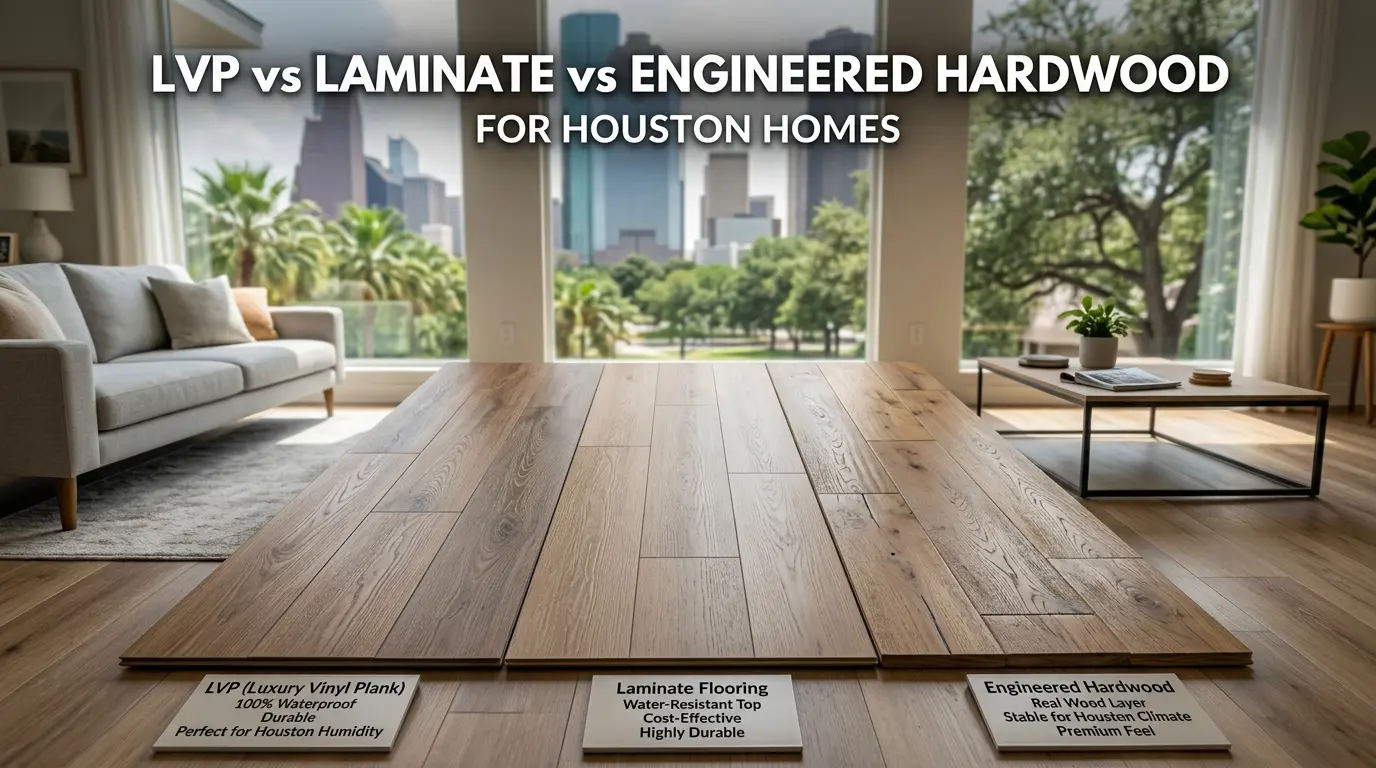
Here is a quick comparison:
| Flooring type | Best use | Moisture care |
| Porcelain or ceramic tile | Bathrooms, kitchens and entryways | Handles surface water well, but needs a stable base |
| Luxury vinyl plank | Kitchens, living rooms and busy spaces | Product may resist water, but slab moisture still matters |
| Engineered hardwood | Bedrooms, dining rooms and living rooms | Needs moisture testing and steady indoor conditions |
| Laminate | Dry bedrooms, offices and living areas | Edges and core may be harmed by water |
| Carpet | Bedrooms and quiet spaces | Can hold moisture when placed over concrete |
| Solid hardwood | Selected dry areas | More sensitive to changes in moisture |
No floor can fix an active leak or wet slab. The water source must be found before installation.
Why Does Houston Humidity Affect Flooring?
Houston has long periods of warm and humid weather. It also receives heavy rain during parts of the year. National Weather Service records show that heat and rainfall are normal parts of the area’s climate.
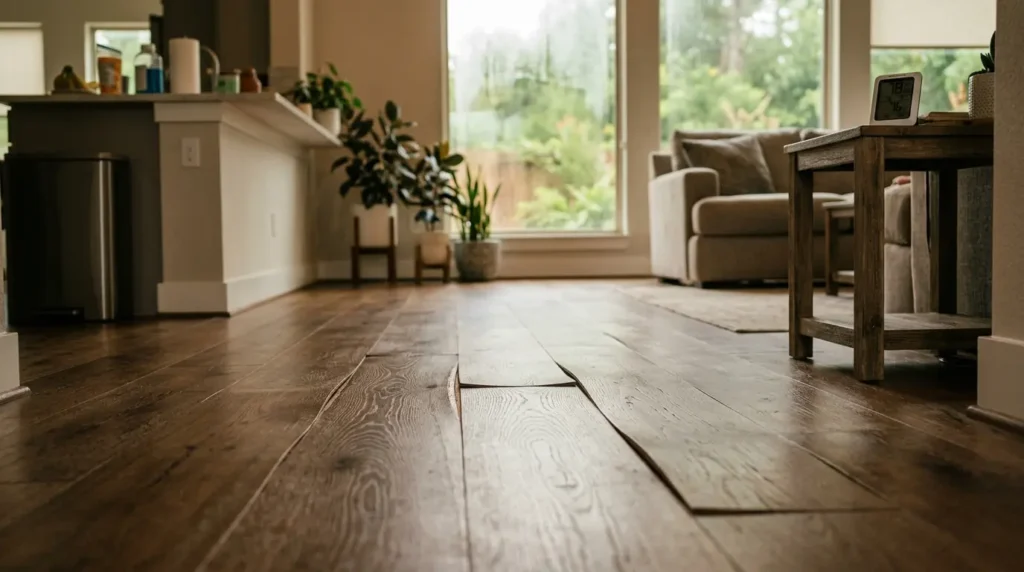
Outdoor humidity does not always enter a home at the same level. Air conditioning helps control indoor air. Still, open doors, plumbing leaks, storm water, and slab moisture can affect a floor.
Some materials take in and release moisture. Wood is a clear example. It may grow a little when moisture rises and shrink when the air becomes drier. This movement is normal, but poor installation can turn it into gaps, lifting, or buckling.
Vinyl, laminate, and tile behave in different ways. They may not absorb moisture like wood, but the parts below them can still be damaged. Adhesive may weaken. Underlayment may trap water. Moisture may also reach walls or baseboards.
The goal is not to find a floor that ignores moisture. The goal is to choose the right material and control moisture before it becomes a problem.
Why Does a Concrete Slab Change the Flooring Choice?
A concrete slab can look dry while still releasing water vapor. This is why a quick visual check is not always enough.
The U.S. Department of Energy explains that a moisture barrier below a slab helps stop ground moisture from moving into the concrete. Older homes may not have the same type of barrier used in newer construction. Damage or building changes may also affect how the slab handles moisture.
The EPA also recommends moisture control below concrete floors. Water vapor can move through the slab and enter the floor system when the right protection is not in place.
Before installing flooring for concrete slab Houston homes, the contractor should check:
- Signs of past water damage
- Dark or damp areas
- Cracks in the slab
- High and low spots
- Loose paint or old adhesive
- Musty smells
- Product moisture limits
- Drainage or plumbing concerns
The slab should also be clean, firm, and flat enough for the chosen product. Long planks can show dips and raised areas more than small flooring pieces.
Is Luxury Vinyl Plank Good for Houston Humidity?
Luxury vinyl plank, also called LVP, can be a good choice for many Houston rooms. It is easy to clean and comes in a wide range of wood-look styles.
Many LVP products are sold as waterproof flooring Houston homeowners can use in kitchens, bathrooms, and family spaces. Read the product details before buying. “Waterproof” may describe the plank itself. It does not mean the full room is safe from leaks or flood water.
Water can move under floating planks through wall edges, doors, or damaged areas. It may then become trapped between the floor and concrete.
The slab must be prepared before LVP goes down. Shaw notes that the surface should be flat, clean, and in good condition. Its installation guidance also calls for the right expansion space around walls and fixed objects.
LVP may be a good fit for:
- Kitchens
- Hallways
- Living rooms
- Entry areas
- Playrooms
- Homes with pets
- Busy family spaces
The floor should not be chosen by price alone. Check the product warranty, wear layer, locking system, installation method, and approved use over concrete.
Is Tile the Safest Choice for Wet Rooms?
Porcelain and ceramic tile are strong choices for bathrooms, laundry rooms, kitchens, and entryways.
Tile does not swell like wood-based flooring. It also handles normal surface water better than many other materials. That makes it useful in rooms where spills are common.
Still, tile is not free from moisture problems. Water can move through cracked grout, damaged joints, or open edges. The slab below must also be stable. A crack or moving area can affect the tile above it.
Tile installation may require:
- Slab cleaning
- Crack repair
- Floor leveling
- A suitable membrane
- Correct mortar
- Proper joint spacing
- Flexible sealant at movement areas
Grout should not be used in every corner or movement joint. The Tile Council of North America notes that movement can cause grout to crack in areas where a flexible sealant is more suitable.
Tile can feel hard and cool underfoot. Rugs may make bedrooms or living spaces more comfortable, but the rugs should be easy to lift and clean.
Can You Install Engineered Hardwood in Houston?
Yes, engineered hardwood in Houston can work well when the room stays dry and the slab is prepared.
Engineered hardwood has a real wood top layer over a layered base. Those layers may make it more stable than solid hardwood when indoor moisture changes. It is still wood, so it can react to water and humidity.
The National Wood Flooring Association says concrete used below wood flooring must be dry. It also calls for suitable moisture tests before installation. High spots should be lowered, and low spots should be filled.
Engineered wood may suit:
- Living rooms
- Dining rooms
- Bedrooms
- Home offices
- Climate-controlled open areas
It is less suited to rooms with frequent standing water. Bathrooms, wet laundry areas, and flood-prone spaces may need another material.
The installation method also matters. Some engineered wood is glued to concrete. Other products can float over an approved underlayment. The flooring and adhesive makers’ rules should guide the choice.
Do not assume all engineered wood can be installed in the same way. Product limits vary.
Is Solid Hardwood a Good Choice Over Concrete?
Solid hardwood can be used in some homes, but it is often less simple over a concrete slab.
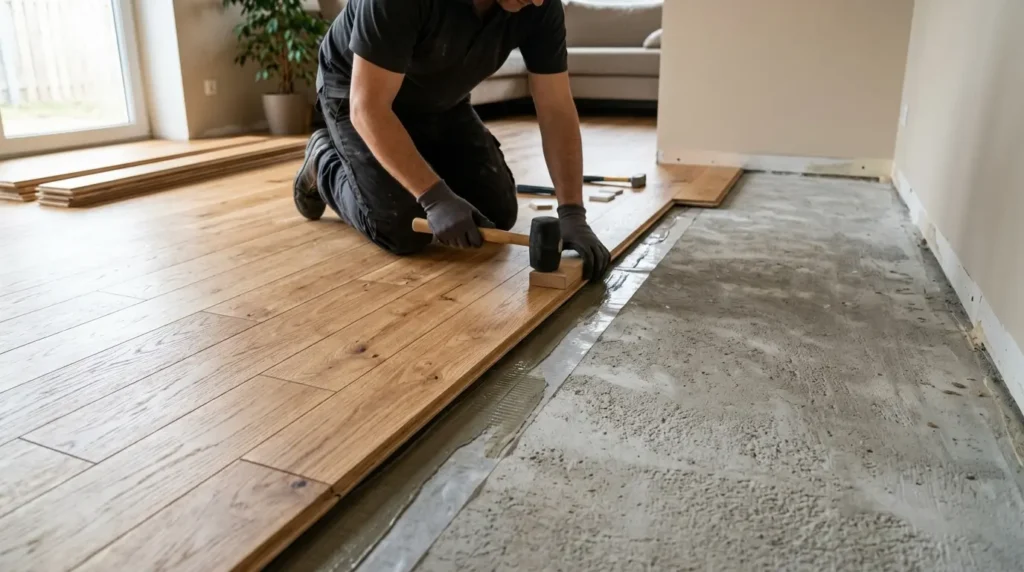
Solid wood changes as it takes in or loses moisture. It may need a wood subfloor system or another approved installation setup. Room height, doors, and transitions may then need changes.
For many slab-built homes, engineered hardwood is the easier wood option. That does not make it risk-free. It still needs a dry base, correct indoor conditions, and proper edge space.
Homeowners who want solid wood should ask:
- Is the product approved for this level of the home?
- What moisture test is required?
- Does the slab need a moisture-control system?
- Will a wood subfloor be added?
- How will the added floor height affect doors?
- What indoor conditions must be maintained?
A clear answer is better than a simple promise that “wood will be fine.”
Is Laminate Moisture-Resistant Flooring?
Some newer laminate products offer strong surface protection and improved water resistance. They can work well in bedrooms, offices, and living rooms.
Still, moisture-resistant flooring is not always fully waterproof. Water may enter through cut edges, damaged joints, or open wall gaps. Once it reaches the core, the plank may swell.
Laminate also needs a flat surface. Low spots can cause the floor to bend when walked on. This places stress on the locking joints.
Before using laminate over a concrete slab, check:
- Product approval for concrete
- Moisture-test rules
- Required underlayment
- Expansion-space instructions
- Limits for bathrooms or wet areas
- Spill-cleanup rules
Laminate may be a reasonable choice for dry areas. It is not the safest option for a room that often gets wet.
What About Carpet Over a Concrete Slab?
Carpet can make a bedroom feel warm and quiet. It may also soften sound in upstairs areas or home offices.
However, carpet can hold moisture when placed over concrete. The EPA tells homeowners to pay close attention to carpet on concrete floors because it can absorb moisture and support indoor pollutants. In some climates, extra moisture protection or a raised subfloor may be needed.
Carpet is usually a weaker fit for:
- Bathrooms
- Laundry rooms
- Wet entryways
- Areas with past flooding
- Rooms with active slab moisture
- Spaces with frequent pet accidents
If carpet is used, the slab and pad should be checked with care. A musty smell should never be covered with new carpet.
What Is Flooring Expansion and Contraction?
Flooring expansion and contraction is the small movement that happens when temperature or moisture changes.
Wood may expand when it takes in moisture and shrink when it dries. Laminate and floating vinyl floors also need room to move. Even tile systems need planned movement joints in large or changing spaces.
Installers often leave a small space near walls, cabinets, columns, and other fixed items. Baseboards or trim cover this space after the floor is installed.
Problems can happen when:
- The floor is tight against every wall
- Cabinets are placed on top of the wrong floating floor
- Heavy items stop the floor from moving
- Long rooms lack needed transitions
- The indoor temperature changes too much
- The product is installed outside its approved conditions
Do not fill expansion spaces with hard glue or grout unless the product instructions allow it. The correct space depends on the material and room size.
Waterproof and Water-Resistant Are Not the Same
These words sound similar, but they can mean different things.
A water-resistant floor can handle small spills for a limited time. The water still needs to be cleaned. A waterproof product may stop water from harming the main plank or tile, but that protection may not cover the whole floor system.
The claim may not include:
- Wall edges
- Baseboards
- Underlayment
- Adhesive
- The concrete slab
- Flood water
- Water below the flooring
Read the warranty instead of trusting the front of the box. Check what type of water event is covered and what installation steps are required.
No indoor floor should replace leak repair, drainage work, or flood planning.
What Should Happen Before Flooring Goes Down?
Good preparation is more important than choosing the most expensive product.
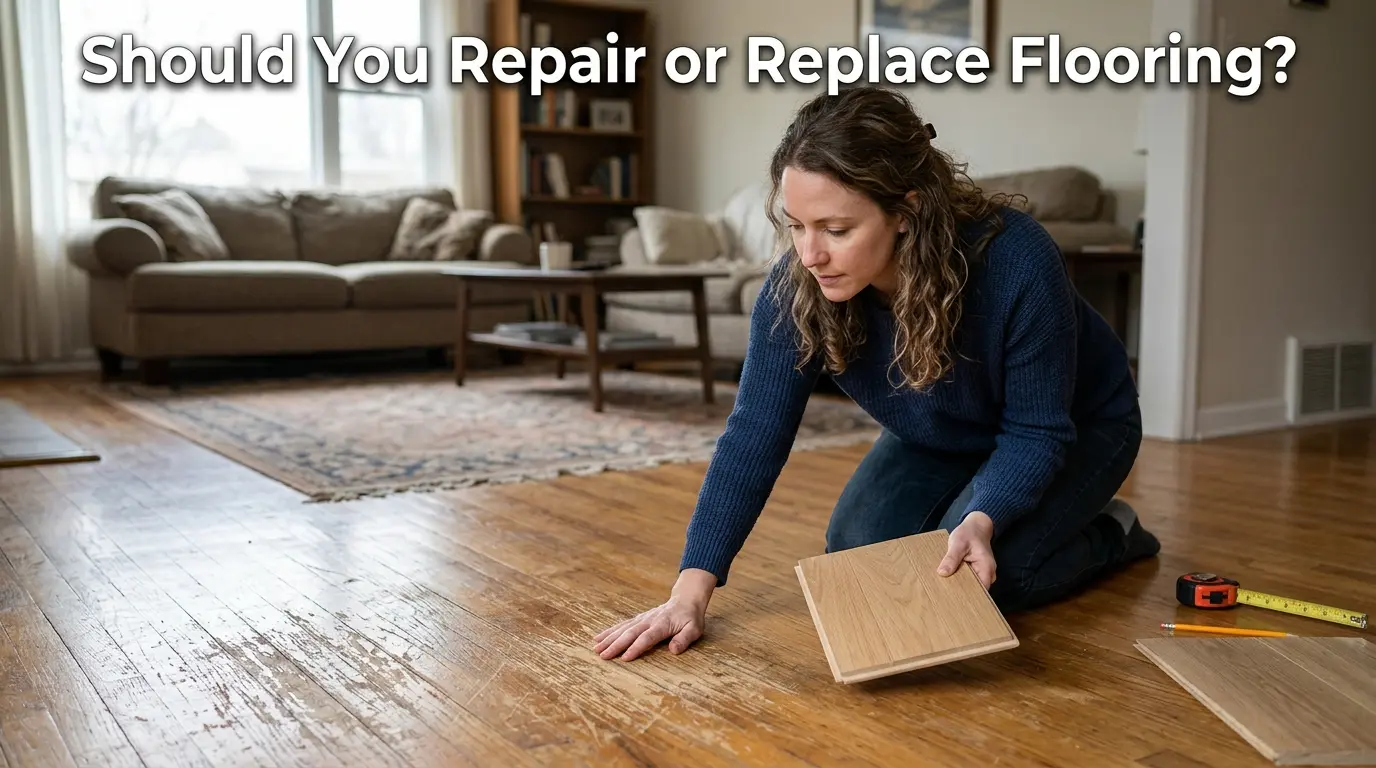
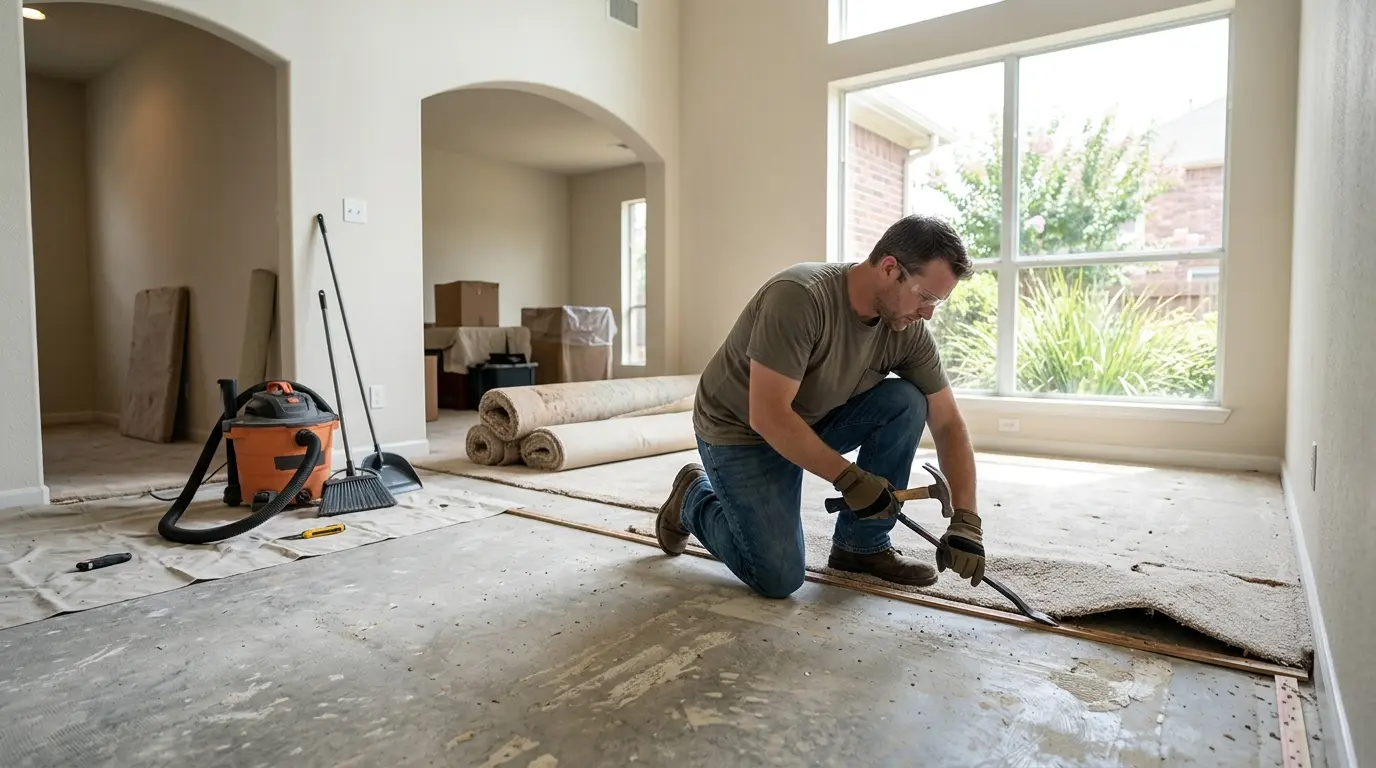
First, the old floor should be checked for damage and movement. If removal is needed, the slab can then be seen more clearly.
Next, the contractor should inspect the concrete. Cracks, old glue, paint, low spots, and weak areas may need work. The moisture test should match the flooring and adhesive instructions.
The National Wood Flooring Association explains that the subfloor is the base of the whole installation. The final floor can only perform as well as the surface below it.
A basic preparation plan may include:
- Removing loose flooring
- Cleaning old adhesive
- Checking slab moisture
- Repairing cracks
- Grinding raised areas
- Filling low areas
- Choosing the right underlayment
- Planning expansion spaces
- Checking room temperature
- Reviewing product instructions
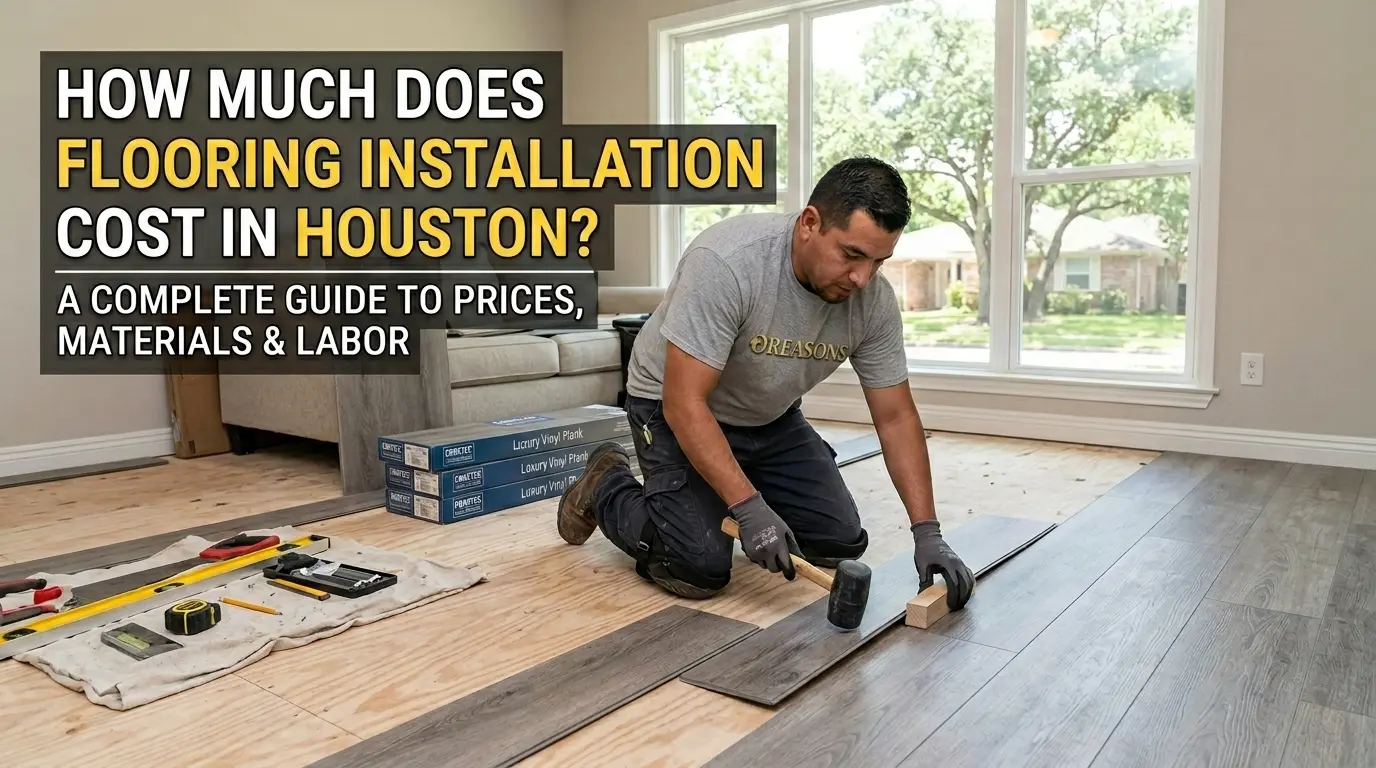
Oreasons Remodeling & Construction describes floor removal, subfloor checks, repair, installation, and cleanup on its Houston flooring services.
Which Flooring Fits Each Room?
The room should guide the choice.
Kitchen
LVP, porcelain tile, and ceramic tile are common options. They are easy to clean and suit busy areas. Check slip resistance and comfort before choosing.
Bathroom
Tile and approved waterproof vinyl products are often practical. Wall edges, toilet areas, and shower zones still need proper water control.
Living Room
LVP, engineered hardwood, tile, and laminate may all work. Think about comfort, pets, cleaning, and the home’s open layout.
Bedroom
Engineered hardwood, laminate, LVP, and carpet are common choices. Carpets need extra care when placed over concrete.
Entryway
Choose a floor that handles dirt, wet shoes, and heavy traffic. Tile and LVP often fit these needs.
For a wider look at materials, costs, and installation steps, read the Houston flooring guide.
Common Flooring Mistakes in Houston Homes
The biggest mistake is choosing by looks alone.
A beautiful floor can still fail if it is wrong for the room. It can also fail when the slab is damp, uneven, or dirty.
Other common mistakes include:
- Skipping moisture testing
- Covering signs of water damage
- Using solid wood without checking the slab
- Treating waterproof flooring as flood-proof
- Forgetting expansion space
- Installing over loose tile
- Ignoring low and raised areas
- Using the wrong cleaner
- Choosing carpet for a damp room
- Buying material before measuring waste
These problems are easier to prevent than repair.
Choose Flooring Based on the Room and Slab
The best flooring for Houston humidity is a floor that fits the room, the slab, and the way your family lives.
Tile and LVP often work well in wet or busy spaces. Engineered hardwood can add a real wood look to dry, climate-controlled rooms. Laminate and carpet may suit selected areas, but both need more care around concrete moisture.
Before buying flooring, inspect the slab. Check for water, cracks, low spots, and old damage. Then follow the product rules for moisture, underlayment, and expansion space.
For help choosing flooring for concrete slab Houston homes, use the Oreasons Remodeling & Construction contact to request an in-home flooring review.
Frequently Asked Questions
What is the best floor for a concrete slab in Houston?
Tile and LVP are often practical choices. Engineered hardwood can also work when the slab is dry and the product is approved for concrete.
Is LVP fully waterproof?
The plank may be waterproof, but the full room is not. Water can still reach edges, trim, underlayment, and the slab.
Does a concrete slab need moisture testing?
It may, depending on the product and adhesive. The test should follow the flooring maker’s instructions.
Is engineered hardwood better than solid hardwood for Houston?
Engineered hardwood is often easier to use over concrete. Both types still need moisture control and correct installation.
Can tile crack when installed over concrete?
Yes. Tile may crack when the slab has movement, weak areas, or untreated cracks.
Can I install laminate in a Houston kitchen?
Some products are approved for kitchens, but the warranty and water rules must be checked. Spills should be cleaned quickly.
Is carpet safe over a concrete slab?
It can be installed over concrete, but slab moisture should be checked first. Carpet may hold moisture and odors when water is present.
Does waterproof flooring stop mold?
No. Mold or other moisture problems can still develop below the floor or inside nearby materials when water becomes trapped.