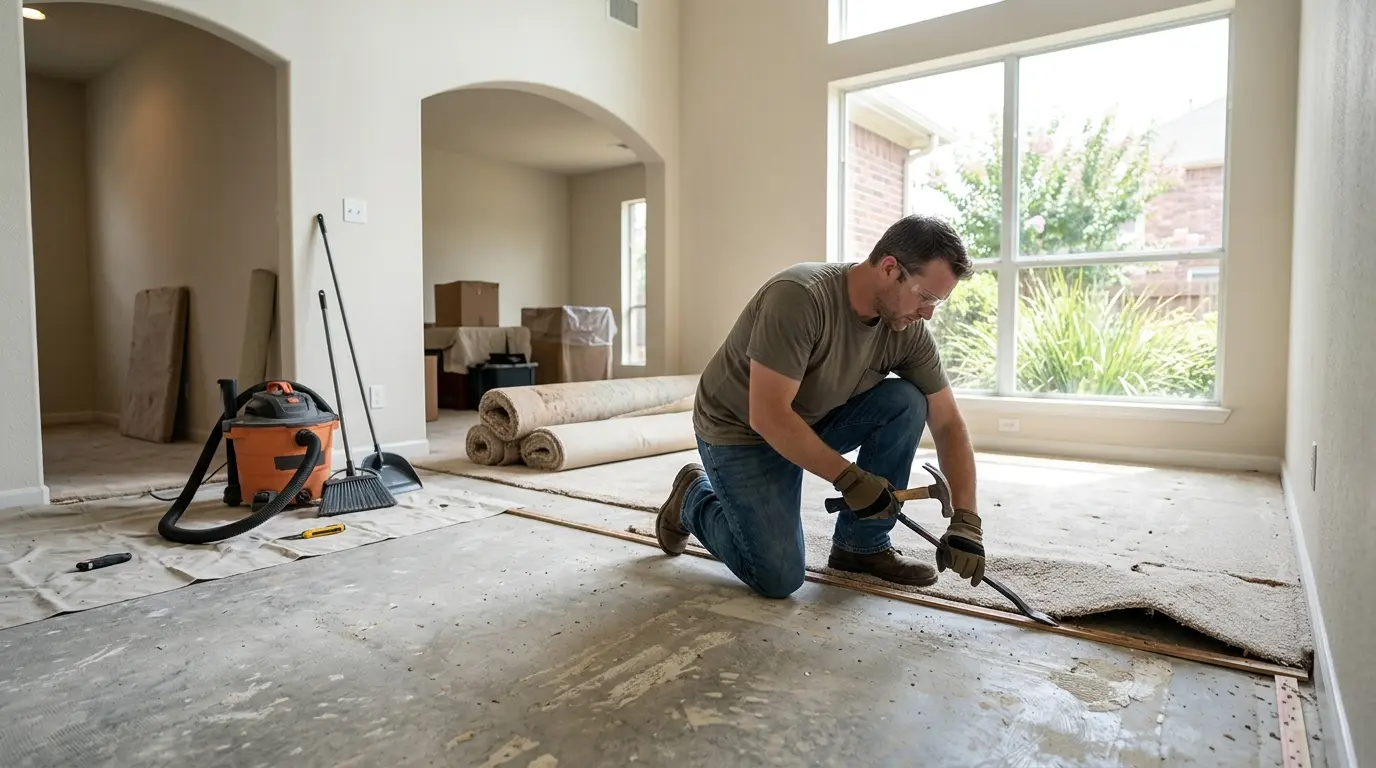
New flooring can make your home feel fresh and clean. Yet the work can also bring noise, dust, blocked rooms, and heavy furniture moves. A little planning can make the job much easier.
To prepare for flooring installation, clear the work area, confirm who will move large items, protect breakable goods, and plan for children and pets. You should also ask about old floor removal, material storage, and the condition of the surface below the floor.
This guide gives homeowners in Houston, TX a clear plan for the days before installation. It also explains what your installer should check and what may affect the schedule.
Start With a Clear Flooring Installation Checklist
A written flooring installation checklist can stop small issues from turning into delays. You do not need a complex plan. You only need to know what must leave the room, who will handle each task, and when the installers will arrive.
Use this basic checklist before work starts:
- Confirm the rooms included in the project.
- Review the flooring type and layout.
- Ask who will remove the old floor.
- Clear small furniture and loose items.
- Pack lamps, art, mirrors, and breakable goods.
- Plan for large appliances and heavy furniture.
- Keep children and pets away from the work area.
- Make space for flooring materials.
- Confirm parking and entry access.
- Ask how long each room may be closed.
- Review cleanup and waste removal.
- Keep one adult available for questions.
Do not wait until the morning of installation to ask these questions. Some items may need a mover, plumber, or appliance worker.
Confirm What the Flooring Quote Includes
Start by reading your estimate again. Do not assume that every task is included.
Some installers may move furniture or remove old flooring. Others may charge extra or ask the homeowner to handle it. Shaw advises homeowners to clear rooms before vinyl installation and notes that furniture moving and old-floor removal may be available but not included in the first price.
Ask your contractor to confirm:
- Old flooring removal
- Waste disposal
- Furniture moving
- Appliance moving
- Baseboard removal
- New trim or quarter round
- Door adjustments
- Subfloor repairs
- Final cleanup
Get the answer in writing. A simple list can prevent arguments after the project begins.
If you are still choosing a floor, read the Houston flooring guide before the final material order.
Do You Need to Move Furniture Before Flooring Installation?
In most cases, yes. The room should be as empty as possible.
Start with small items. Remove chairs, side tables, lamps, baskets, plants, toys, and floor décor. Empty bookcases and cabinets that may need to move. Take fragile items to a room that will not be part of the project.
Large furniture needs a clear plan. Ask whether the crew will move beds, sofas, dining tables, or dressers. Do not assume that furniture moving is part of the installation price.
Very heavy or special items may need outside help. These may include:
- Pianos
- Pool tables
- Large safes
- Fish tanks
- Adjustable beds
- Home gym machines
- Oversized cabinets
Do not try to lift an item that is too heavy for you. The cost of proper moving is lower than the cost of an injury or damaged floor.
Where Should You Put the Furniture?
Move furniture into a room that is not being worked on. A garage may also work if it is dry, secure, and does not block the flooring materials.
For a whole-home project, ask whether the job will be done in stages. The crew may finish one area before moving furniture into it and starting the next room.
Do not fill halls or doorways. Installers need a clear path for planks, tools, waste, and equipment.
Remove Breakable and Loose Items
Flooring work can cause noise and vibration. Wall décor near the work area may shift or fall.
Remove framed photos, mirrors, clocks, and light wall shelves from the room. It is also smart to clear items from the other side of a shared wall, mainly when tile removal or floor grinding is planned.
Pack small goods in closed boxes. Label each box by room so it is easier to put things back later.
Also clear:
- Window sills
- Low shelves
- Closet floors
- Under-bed storage
- Entry tables
- Open cabinets near the floor
- Floor vents, when safe to do so
The goal is not only to protect your belongings. A clear room also gives the crew more space to work.
Plan for Appliances and Electronics
Large appliances need special care. Ask who will disconnect and move the refrigerator, stove, washer, dryer, or dishwasher.
A flooring installer may be able to move an appliance, but that does not always mean the crew will disconnect water, gas, or electrical lines. Confirm this before the project date.
Empty food from any appliance that will be unplugged. Secure loose shelves and drawers. After the appliance is moved back, check the water line and nearby floor for leaks.
Televisions, computers, gaming systems, and sound equipment should also leave the work area. Unplug the cables and label them before packing.
Keep Children and Pets Away From the Work Area
Floor installation is not a safe play area. The crew may use saws, cutters, adhesives, sharp tools, and heavy materials.
Keep children in another part of the home or arrange for them to stay elsewhere during the busiest work. Pets should be placed in a closed room far from the work zone or taken out of the home.
A loose pet can run through an open door, step on adhesive, or get close to tools. Barking or repeated door opening may also slow the crew.
Tell the installer where your pets will be. Place a clear note on any door that should remain closed.
Make the Entry Path Easy to Use
Installers may carry long boxes and heavy tools. They need a direct path from their vehicle to the work area.
Clear shoes, packages, plants, toys, and small tables from the entrance. Check that gates open and that outdoor steps are not blocked.
Ask where the work vehicle should park. A close space can make material delivery faster, but it should not block neighbors, mailboxes, or shared drives.
Cover items near the entry that you want to protect from dust. Keep the path wide enough for two people to carry large flooring boxes.
Prepare a Space for Flooring Materials
Your new flooring may arrive before installation day. Ask where it should be stored and how the boxes should be placed.
The storage area should be dry, clean, and protected from damage. Do not leave flooring outside, near a leaking wall, or in a place with large temperature changes unless the product maker allows it.
Keep the product boxes flat when the instructions call for flat storage. Do not open, stack, or move the packages without checking with the installer.
Check the material after delivery. Confirm the product name, color, size, and amount. Tell the contractor at once if the boxes look wet, crushed, or badly damaged.
Why Does Flooring Acclimation Matter?
Flooring acclimation allows some flooring products to adjust to the conditions inside the home before they are installed. This can lower the risk of unwanted movement after installation.
The correct process is not the same for every floor. Pergo, for example, tells users to keep its laminate planks in unopened packs inside the room for at least 48 hours. Shaw says some luxury vinyl products may not need acclimation but should still be installed in a climate-controlled space.
Do not use one fixed rule for LVP, laminate, hardwood, and tile. Follow the written instructions for the exact product.
Ask your installer:
- Does this floor need to adjust before installation?
- How long should it stay inside?
- Should the boxes remain closed?
- Which room should hold the material?
- What indoor conditions are needed?
Houston has a warm climate and receives regular rain through the year, so steady indoor conditions and moisture checks can matter during floor preparation.
Keep the air conditioning running at normal living settings unless the product or contractor gives different directions.
Why Is a Subfloor Inspection Needed?
A subfloor inspection checks the surface that will support the new flooring. This may be a wood subfloor, concrete slab, or another approved base.
The surface should be clean, firm, dry, and flat enough for the chosen product. Pergo notes that subfloor quality has a major effect on the final result and tells installers to check for uneven areas, loose sections, dirt, and moisture before laying laminate.
Problems may stay hidden until the old floor comes up. The crew could find:
- Cracks in concrete
- Loose wood panels
- Old adhesive
- Low or raised spots
- Damp areas
- Water stains
- Soft sections
- Squeaks or movement
- Damaged underlayment
These issues may add time to the project. They should still be fixed before the new floor is installed.
Covering a weak or wet surface does not solve the cause. It only hides it under the new material.
What Should Houston Homeowners Check for Moisture?
Look for signs of leaks before installation day. Check sinks, toilets, dishwashers, washing machines, exterior doors, and nearby walls.
Tell your contractor about any past flooding, plumbing work, or damp flooring. Even an old issue can help the installer know where to look.
If your home has a concrete slab, the flooring product may require a moisture test. The test method and allowed level depend on the product, adhesive, and installation system.
Do not mop the bare floor or wash the work area just before installation unless the contractor tells you to do so. Extra water may delay surface preparation.
A musty smell, dark mark, or lifting floor should not be ignored. Find the source before placing new material over it.
Should You Remove the Old Flooring Yourself?
Only do this when the contractor agrees and you understand the risks.
Removing loose carpet may look simple. Glued vinyl, tile, wood, and old adhesive can be much harder. Poor removal can damage the slab, subfloor, walls, or trim.
Older flooring and adhesive may also need special testing before they are disturbed. Do not grind, cut, or tear into unknown old materials without proper advice.
Professional removal may be the better choice when:
- The floor is glued down.
- Tile covers a large area.
- The home has several floor layers.
- Water damage is present.
- The subfloor feels weak.
- You do not have proper disposal.
- The material is old or unknown.
Ask Oreasons Remodeling & Construction what removal work is included before doing any demolition yourself. The company’s flooring services page gives an overview of its installation work.
How Long Will the Flooring Project Take?
A flooring project timeline depends on the room size, floor type, old flooring, layout, and amount of surface repair.
A clear, open room with a ready base may move faster than several small rooms with closets, stairs, or damaged floors. Subfloor preparation can also add time, but Shaw warns that this step should not be skipped.
Ask for a room-by-room plan instead of one broad completion date.
Your schedule may include:
| Stage | What may happen |
| Before work | Material delivery and room clearing |
| First stage | Old floor and trim removal |
| Preparation | Cleaning, moisture checks and repairs |
| Installation | Planks, tile, carpet or wood installed |
| Finish work | Transitions, trim and final checks |
| Cleanup | Waste removal and care guidance |
Unexpected repairs can change the plan. Ask the project manager to contact you before extra work begins.
What Should You Do on Installation Morning?
Be ready before the crew arrives.
Make sure the work rooms are clear. Put pets in their safe place. Move vehicles if the crew needs the drive. Unlock the agreed entry and keep your phone nearby.
Walk through the project with the lead installer. Confirm:
- Rooms included
- Floor direction
- Starting area
- Trim plan
- Transition locations
- Furniture plan
- Appliance plan
- Cleanup plan
- Contact person for changes
Do not leave until the crew knows how to reach you. A quick answer may stop a small layout issue from delaying the whole job.
What Should You Expect After Installation?
Ask when you can walk on the floor and move furniture back. The answer depends on the floor and the products used.
Some adhesives or finishes may need time before normal use. Do not guess. Follow the installer and product instructions.
Before moving furniture back:
- Check the finished floor.
- Review seams and transitions.
- Test moved appliances for leaks.
- Add felt pads under furniture legs.
- Lift furniture instead of dragging it.
- Keep the care guide and warranty papers.
Report a concern before the crew leaves when possible. It is easier to review a detail while the tools and materials are still on site.
Get Your Houston Home Ready for New Flooring
The best way to prepare for flooring installation is to plan early. Clear the rooms, confirm who will move large items, protect fragile goods, and keep children and pets out of the work area.
Do not forget the parts you cannot see. Material storage, flooring acclimation, moisture checks, and a proper subfloor inspection may affect the final result as much as the visible floor.
Oreasons Remodeling & Construction can review your rooms, flooring choice, removal needs, and flooring project timeline before work begins. Use the company’s contact to request a flooring consultation in Houston, TX.
Frequently Asked Questions
How early should I prepare my home for flooring work?
Start planning several days before the project. Heavy items, appliances, material delivery, and storage may need more time.
Do flooring installers move all furniture?
Not always. Some companies include basic furniture moving, while others charge extra. Heavy or special items may need a separate mover.
Should I empty closets before new flooring?
Yes, when the new floor will enter the closet. Remove shoes, boxes, hanging items near the floor, and anything that may block the crew.
Can flooring stay in the garage before installation?
Only when the product instructions and installer allow it. A garage may have different heat and moisture levels from the home.
Do all floors need acclimation?
No. The need and timing depend on the exact flooring product. Follow the maker’s instructions rather than using one rule for all materials.
Should I turn off the air conditioning?
Usually, no. Many floors need stable indoor conditions. Ask the installer before changing the normal temperature.
Can my family stay home during installation?
Often, yes, but the work areas should remain closed. Noise, dust, blocked rooms, and strong product smells may make staying elsewhere more practical.
What happens if the installer finds subfloor damage?
The work may pause while the damage is reviewed. Ask for a clear repair price and schedule change before approving extra work.